
FIELD OFFICE is a landscape observatory focused on the past, present, and future role of glaciers in the Great Lakes region north to the Arctic Archipelago.
Project documentation, notes from research trips, and more.
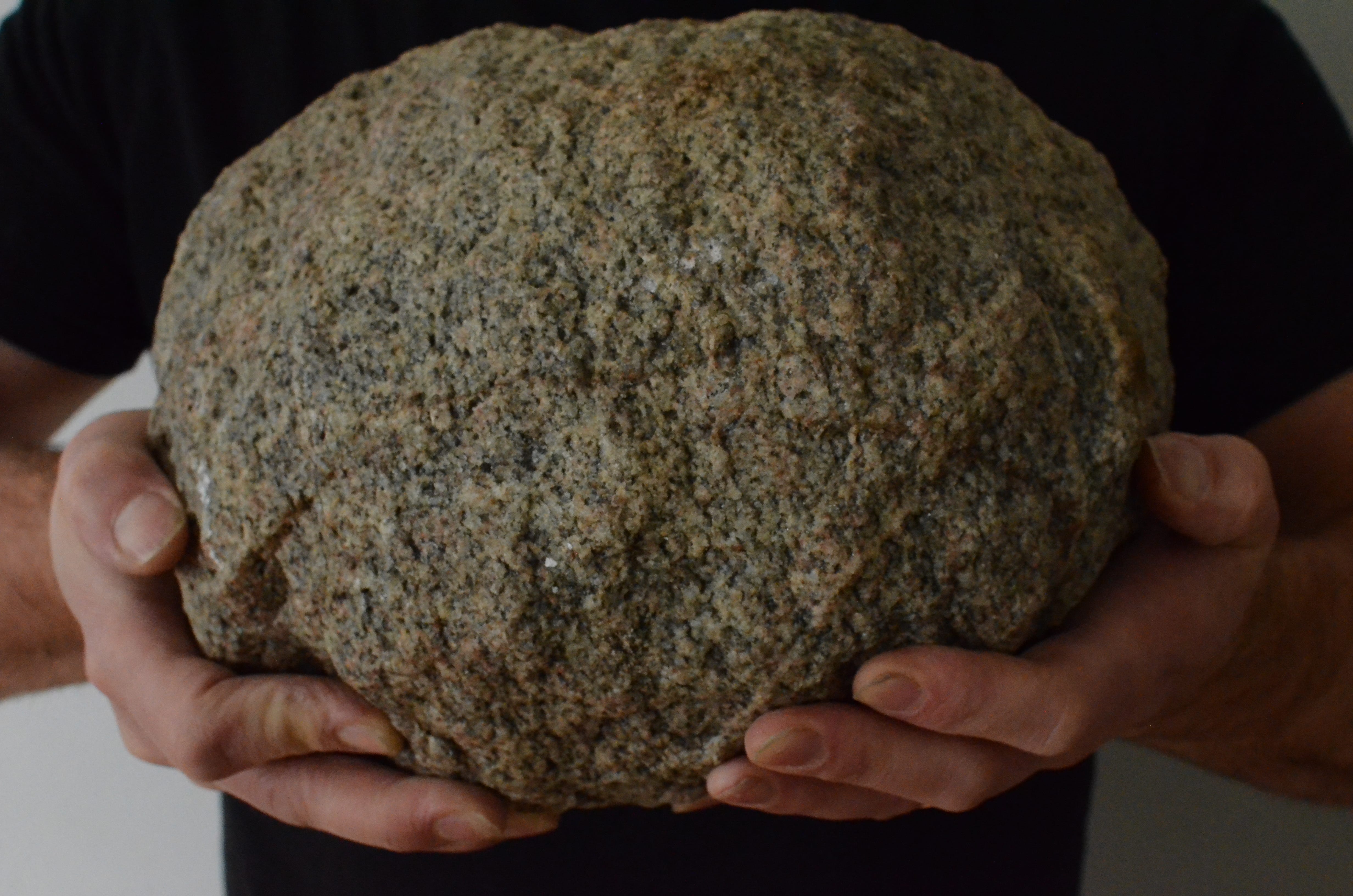
A couple of years ago I found this 38lb (17kg) granite boulder in a field in Ohio. This piece of granite broke off from the Canadian Shield during the last ice age when a glacier the size of Canada picked it up and pushed it south some 30,000 years ago. That ice sheet shaped every landscape it passed through, moving clay and stone and sand in its body of ice.
Now I’m telling a story about this stone, the glaciated landscapes of the Great Lakes region north to the Arctic Archipelago, and I’m attempting to return this stone to the last remnant of the glacier that originally moved it south: the Barnes Ice Cap on Baffin Island, Nunavut:
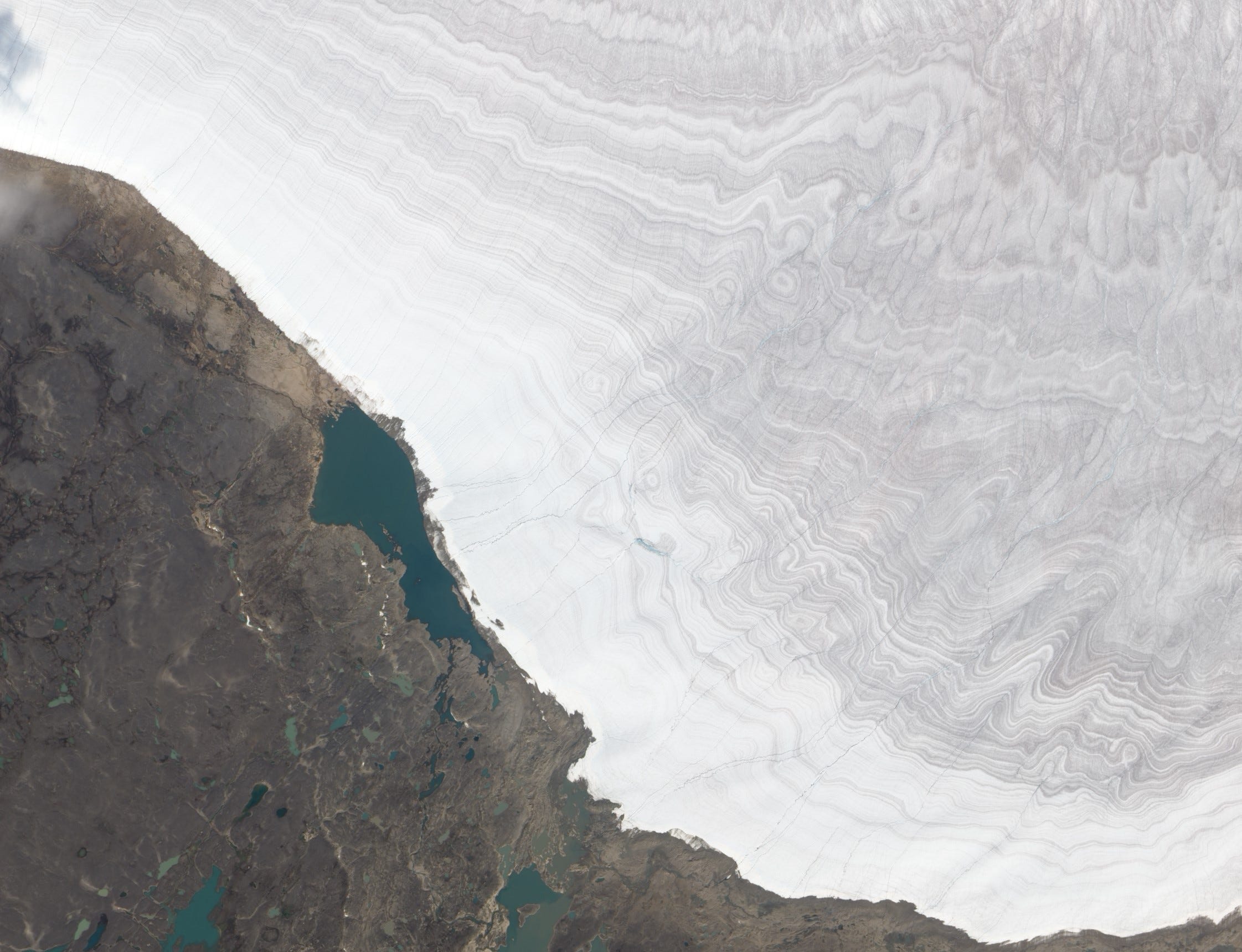
I want to bridge between the last ice age and the next ice age by participating in the glacial game of moving stones, a kind of deep-time collaboration to get this stone back to the place where it came from so that it is ready for the next ice age.
Along the way, I’m also building deep contextual knowledge about the Great Lakes region and the last ice age, and I’m observing landscapes to understand the past, present, and future role of glaciers in this region, and I’m letting my practice as an artist be shaped by this glacial force in literal and metaphorical ways.
I work to understand glaciers in their absence, through the traces they have left in the Great Lakes region where I live. I don’t have much of a choice but to imagine them. There is a reverence of the unseen and I try to understand it in ways that end up feeling like ritual. Replicating glacial behaviors, mimicking glacial processes, mapping the glacial movement of stones and clay, recreating glacial functions at human scale, playing with the possibilities at a landscape scale, and bridging across time to connect ice ages from the deep past with ice ages of the deep future. The work I produce and the tools I build prime actual landscapes for collaborative activation in the deep future when my objects will yield to the geologic force of the next glacier in the next ice age.
BIO
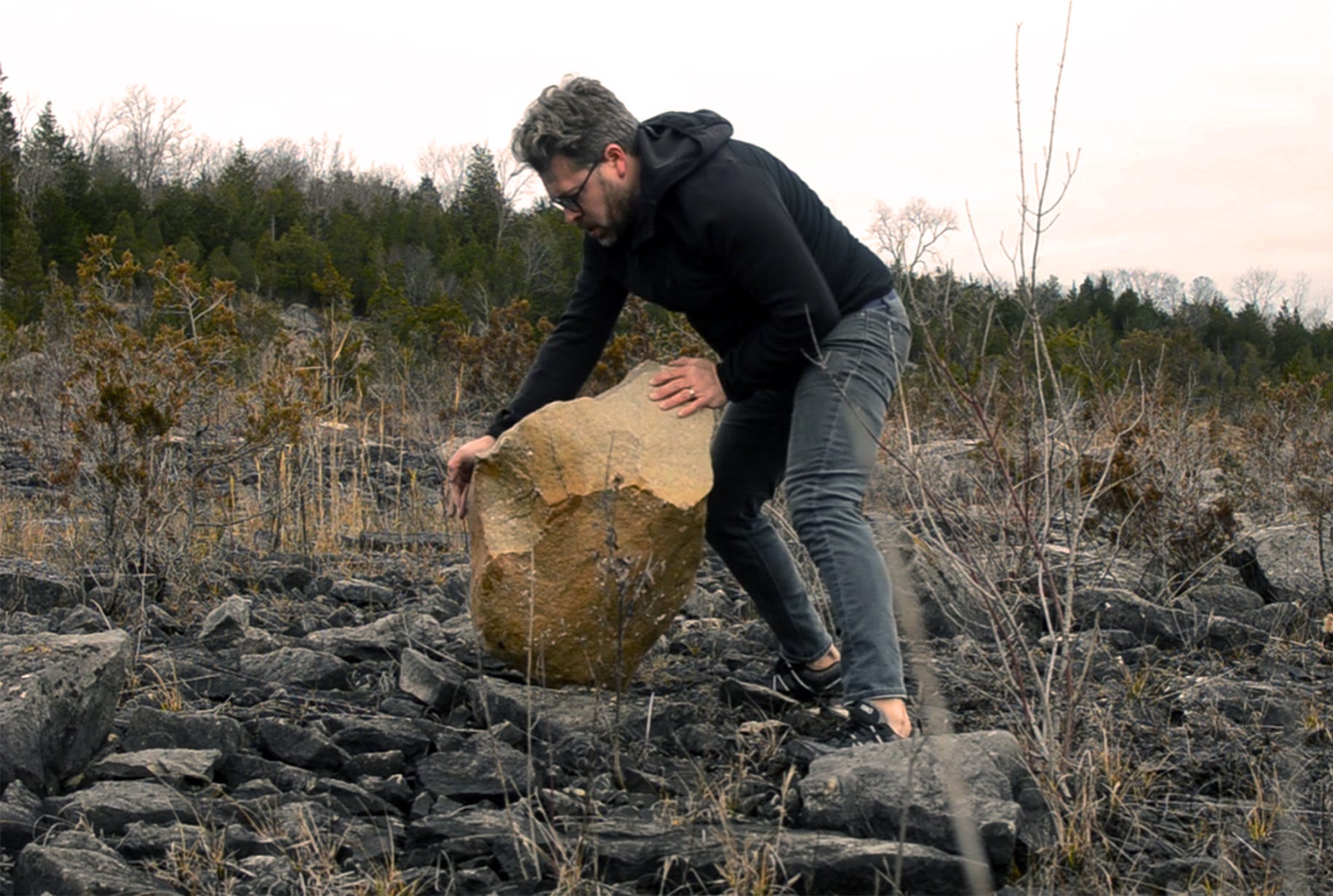
RYAN DEWEY is an artist and researcher working across fieldwork, material practice, and systems level inquiry. His work focuses on landscapes shaped by ice, water, and long temporal scales, and on the forms of attention produced through sustained engagement with place. Moving between observation, measurement, and intervention, his practice treats materials, sites, and objects as tools for reading landscapes and the cultural, ecological, and infrastructural systems embedded within them.
Through FIELD OFFICE, Dewey develops expeditionary research methods that combine in situ investigation, documentation, and applied analysis. This work produces field notebooks, measured drawings, photographs, training materials, objects, and data sets that inform both public facing projects and longer term advisory or research engagements. His work is grounded in long duration field presence, particularly within the glacial and post glacial landscapes of the Great Lakes region.
Dewey is also the founder of ANGLING DIVISION, a data-driven research project focused on rivers and tributaries within the Great Lakes HUC 04 watershed. Emerging from his broader landscape research, the project treats angling as a mode of attuned attentiveness and field-based knowledge production, integrating ecological data, participant observation, and river-specific reporting. Selected works and research materials are stewarded by the Center for Art + Environment at the Nevada Museum of Art, and his work has been engaged by writers such as Nicola Twilley and Warren Ellis, and discussed within the context of Anthropocene studies, including by Donna Haraway.
Alongside his artistic and field-based research, Dewey brings nearly two decades of professional experience in communications and strategic advisory, including employment with a consulting firm serving defense clients and complex operational programs. This background informs his ability to translate observational insight and field intelligence into actionable strategies, connecting long-duration research with decision-making across environmental, technological, and institutional contexts. He has lived and worked across islands, inland waterways, deserts, and cold weather landscapes, with extended time on two of the five Great Lakes, and has received residencies at ACRE in Chicago, the Alps Art Academy in Switzerland, and the Montello Foundation in Nevada. He has also served three appointments as visiting scholar in cognitive science at Case Western Reserve University, where he authored the open access book Hack the Experience: New Tools for Artists from Cognitive Science (Punctum Books).
More at RyanDewey.org
