
FIELD OFFICE, a Conceptual Overview

FIELD OFFICE — Conceptual Overview
Origin: FIELD OFFICE (Practice)
Post Type: Practice Structure / Orientation
Circulation: Indexed Only
Date of Publication: 2025-12-29
Related Divisions: FIELD OFFICE, STUDIO, GEOCOG, ANGLING DIVISION, 1910, DRIFT CABINET
Purpose: Introduce readers to the structure of the practice and explain how artifacts and insights are produced
Author: RYAN DEWEY
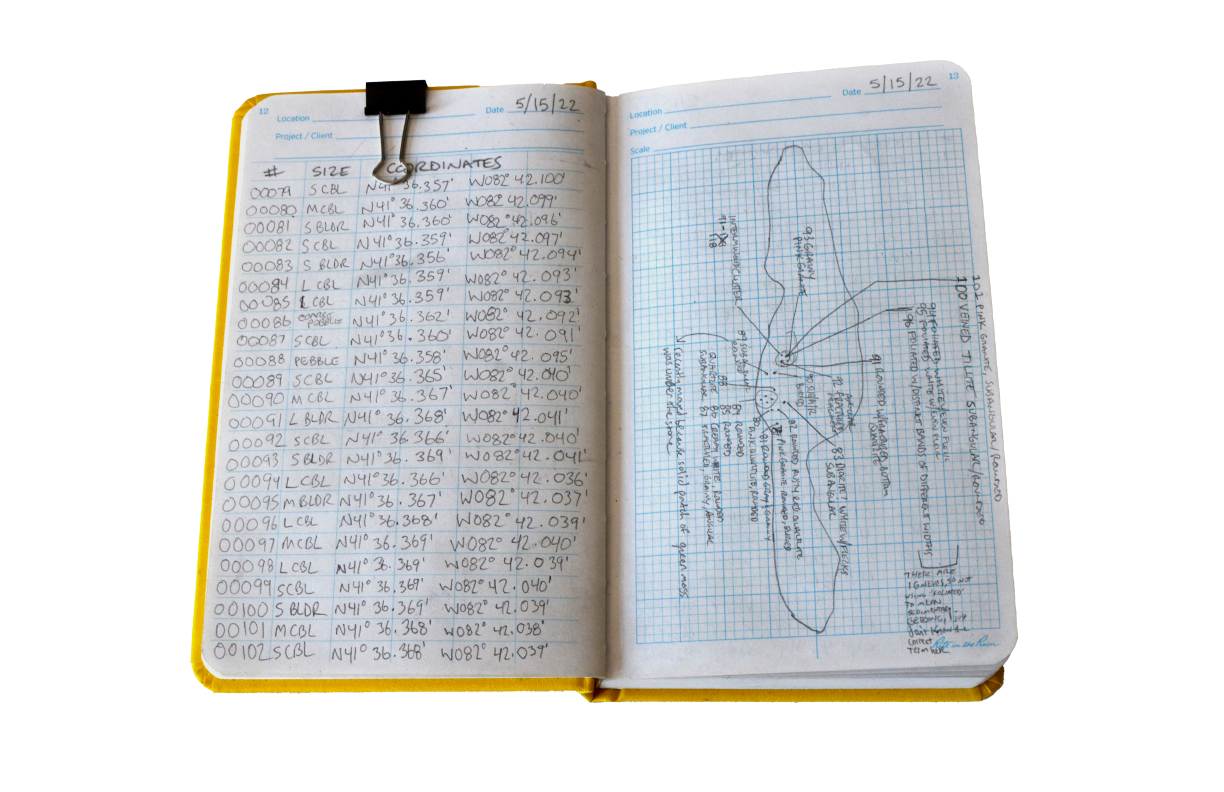
I have heard on multiple occasions that my work is hard to see in one place; that it exists in fragments, archives, or private collections. The truth is, FIELD OFFICE has always been about active observation, research, and experimentation across landscapes, material production, and community practice. What I’m sharing here is a map of the practice: a way to make visible how expeditions, artifacts, data, and insights connect across divisions. Understanding this structure gives readers a clear path to explore the work itself, see the relationships between projects, and follow the logic behind the insights that emerge from both FIELD OFFICE research and Angling Division activities.
I want to start with a simple map of the practice, a way to see how observation, research, and analysis flow across different facets of FIELD OFFICE. Understanding the structure makes the individual artifacts and projects easier to follow, while also showing how each division contributes to the broader vision.
1) FIELD OFFICE
This is my landscape observatory in motion. Fieldwork, expeditions, and landscape research happen here, forming the raw observations that feed everything else in the practice. It’s where data is collected, patterns are recognized, and questions take shape. This is where my work begins and returns, before becoming anything else.
2) STUDIO
As a visual artist, I proliferate objects and material output as a way to think about the world. FIELD OFFICE research uncovers concepts and relationships that I translate into tangible artifacts. Observations and analysis are made material, creating objects and documents that carry knowledge forward.
3) GEOCOG
I also run a strategic fieldcraft consultancy that applies analytical models I design to inform projects in land stewardship, quarry and mine analysis, ag tourism and ag tech, but I work on things related to what I observe through FIELD OFFICE, which is why my consulting feels grounded in something bigger. Observations translate into practical and strategic applications that connect research to real-world decision-making for industrial partners, family offices, and land use agencies.
4) ANGLING DIVISION
I produce a regional fly-fishing intelligence publication for the entire Great Lakes watershed (HUC 04, US & Canada). By pairing self-reported angler data with geomorphological and ecological indexes, we interpret trends across rivers, conditions, and species throughout the season. Insights culminate in the end-of-season Ledger available exclusively to data-contributing members. Anglers’ repeated observations of particular rivers over time align naturally with FIELD OFFICE methods, turning individual experiences into collective intelligence that informs both members and the practice itself.
5) 1910
The premium outfitter branch of ANGLING DIVISION. Handmade rods, kit, and gear are designed and produced based on insights from ANGLING DIVISION and FIELD OFFICE, translating observation and analysis into high-quality, low-volume, heritage-quality products. I don’t expect to write about 1910 here unless something about the design of the product gives insight to a larger systems-level observation, or functions as a broader cultural note. If i showcase a product here it will relate directly to developing attunement to landscape, or a tool I develop that expands an approach to fieldwork.
6) DRIFT CABINET
This is an experiment, a mobile micro-exhibition space, literally a cabinet on wheels. The project combines archival and current FIELD OFFICE outputs for public engagement, showing research and artifacts together in context. Don't expect much content on the cabinet, it only appears intermittently and it’s designed for in-person experience, but it's part of what I do, so I've included it here. If you’re a Great Lakes regional institution that wants to host a temporary installation of Drift Cabinet, feel free to reach out.
That’s the basic map of my practice.
Seeing the six divisions together gives a clear sense of FIELD OFFICE’s rigor and continuity, how observation becomes insight, and how the work extends from research into interpretation, craft, and community.
Each artifact you encounter in upcoming posts may touch one or more of these divisions, but much of this will remain behind the scenes. Sometimes I’ll produce narrative translation posts to provide the connective tissue, showing how observations, analytical methods, membership data, and material outputs interrelate, but I’ll never bombard with drivel, and I’m not peddling my wares here.
I didn’t want to start writing and referencing these divisions without a clear map, because without seeing the structure, my practice can look a little confusing. But I believe that organization is a kind of prosperity, and the way that I have structured my practice feeds the by-products, insights, and latent value from one division into the next division as new material. I can’t let it go to waste, so I build the structure to put it into use.
Thanks for sticking with me.