
Is This Philatelic Mail or Contrived?: Authenticity, Contrivance, & A Porous Boundary
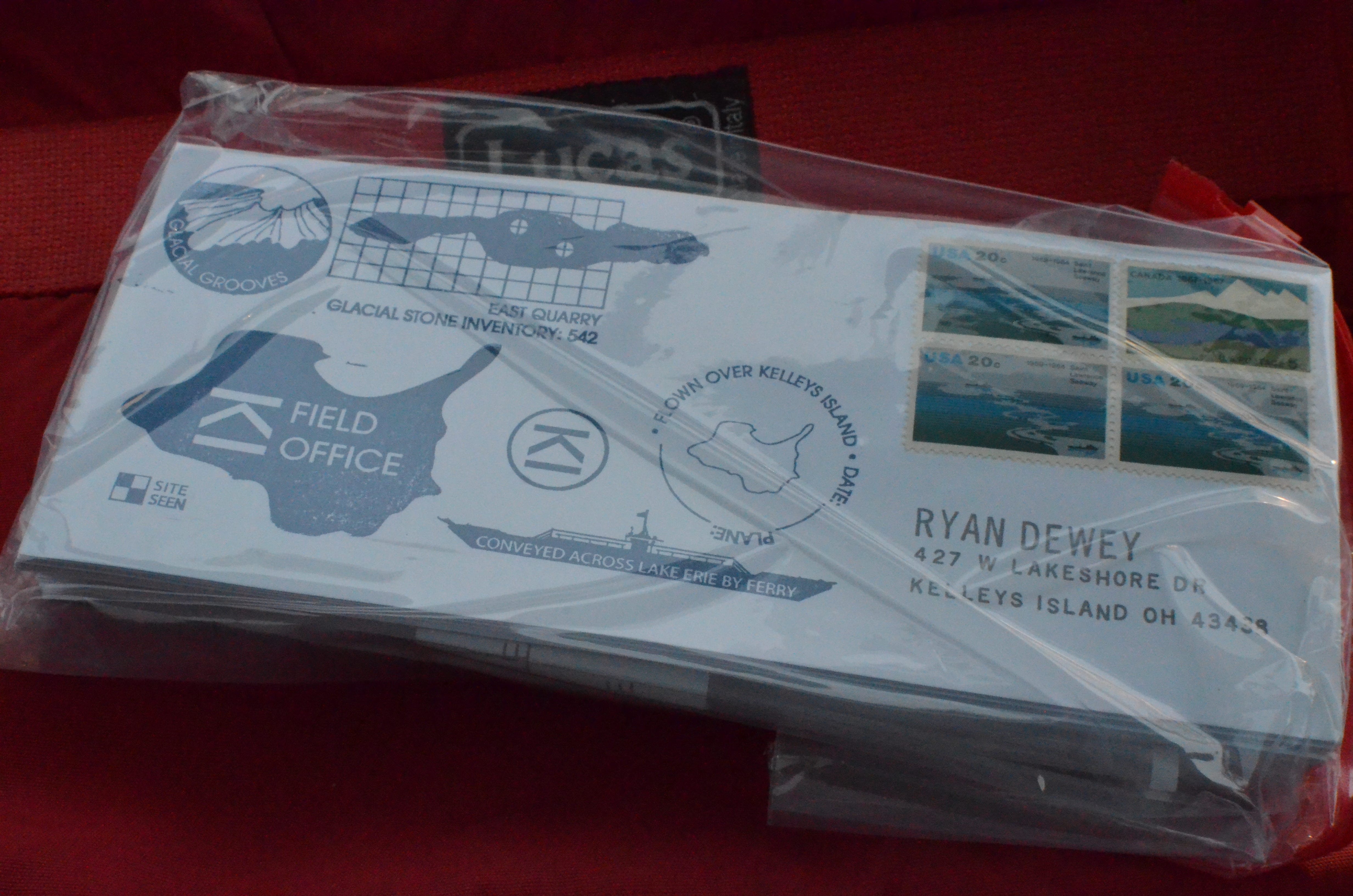
Is this authentically philatelic, or is it contrived mail?

ABSTRACT
This text examines the long-standing divide within philately between authentic postal use and mail deemed contrived. It situates contemporary postcard-based practices within this contested space, arguing that intentionality and authenticity are not mutually exclusive. By framing designed correspondence as both a reflective artifact and a genuine participant in postal circulation, the article proposes a broader understanding of how expeditionary and preparatory mail can function as valid contemporary postal history.
Keywords: Philately, Postal history, Authentic mail, Contrived covers, Expedition mail, Contemporary philatelic practice, Postcards, Collecting theory
Any discussion of contemporary philatelic practice must contend with a long-standing and sometimes uncomfortable distinction within the collecting community: the divide between what is considered authentic postal use and what is dismissed as contrived mail.
At its most rigid, the argument runs as follows. Mail that exists because it needed to exist, that is, correspondence generated independently of collecting intent and sent through ordinary necessity, is authentic. Mail that is produced by a collector, especially when designed with collectors in mind, is suspect. In its harshest formulation, if a piece was created because it would be collected, it forfeits its legitimacy as postal history.
This position has deep roots. Postal history as a discipline matured through the study of commercial correspondence, administrative mail, and utilitarian transit markings. Collectors learned to read envelopes as forensic evidence, not as expressive objects. From that perspective, intentionality matters. A cover addressed to oneself, a postcard designed with philatelic awareness, or an item franked for thematic resonance rather than necessity can be interpreted as staging rather than documentation.
Many collectors therefore regard expedition mail produced by known philatelists, artists, or expedition personnel responding to collector demand as compromised. The label “contrived” is often applied broadly, collapsing a wide range of practices into a single category of diminished interest. This attitude persists even though much of what is now considered canonical expedition mail, especially from the Heroic Age and early Modern period, was itself produced with an acute awareness of audience, symbolism, and posterity.
What complicates this distinction is that expeditions have always been communicative enterprises. Expedition mail has rarely been accidental. It has carried messages not only to recipients but to the future. Cachets, inscriptions, route markings, and explanatory text were intentional interventions, not passive byproducts of transport. The difference between “authentic” and “contrived” often rests less on the object itself than on retrospective judgments about motive.
My postcard projects sit deliberately in this contested space.
On one hand, they are designed. They reference historical forms. They embed templates, visual systems, and topical postage choices. They are produced by someone who is fully aware of philatelic conventions and community debates. By orthodox standards, this alone may place them outside the strictest definition of authenticity.
On the other hand, they are also real correspondence. They convey actual messages. They move through the contemporary postal system under real conditions. They are handled, delayed, damaged, misrouted, and postmarked by the same infrastructure that processes all other mail. Their material state upon arrival is not simulated. It is the outcome of use.
In this sense, they occupy a dual status. They are both designed artifacts and records of postal action. They do not pretend to be something they are not, nor do they exist outside the systems they engage. If they are contrived, they are contrived in the same way many historic expedition covers were: intentionally composed, consciously symbolic, and nevertheless authentic participants in postal circulation.
Rather than attempting to resolve this tension, I am interested in holding it visible. The postcards ask whether authenticity must be defined by absence of intent, or whether it can accommodate reflective practice that is still embedded in lived movement, material encounter, and institutional constraint.
If polar philately is understood not only as the study of where mail went, but how expeditions communicated about themselves, then preparatory and training-stage artifacts deserve consideration, even when they are self-aware. These postcards do not ask to replace traditional postal history. They ask to sit adjacent to it, as contemporary artifacts that document how expeditionary communication is practiced now, with full knowledge of the traditions it inherits.
Whether individual collectors accept or reject them is, ultimately, a personal and community decision. My aim is to make the case that their ambiguity is not a flaw, but a record of how philatelic practice continues to evolve.