
Knowing enough to quit
Notes on accumulation as method

If I look back over the past decade of practice, I can see that I’m asking a very small set of questions through a wide range of approaches, methods, and mediums. I’m not sure how well this set reads to observers, but it holds my interest nonetheless.
If you pick up any single pebble, it might as well stand in for every other pebble you could possibly find, and the moment you hold that pebble in your hand it becomes the standard for how you judge whether or not something is a good pebble.
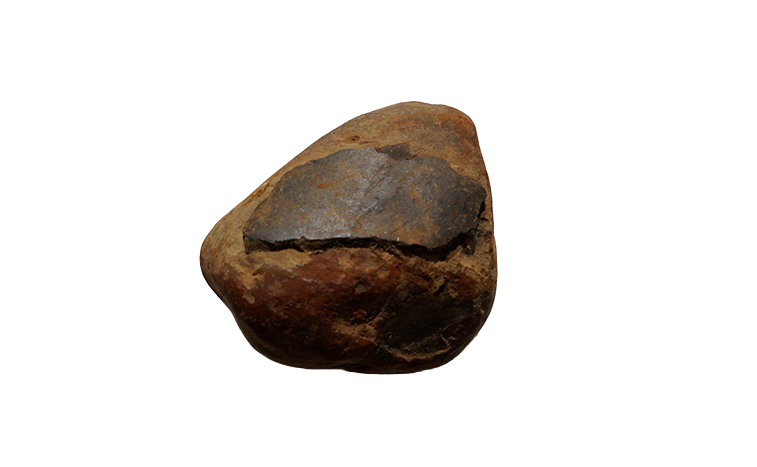
This is the foredge of categorization, where a category expands with each additional object, and the most recent object holds the most salience, anchoring for a moment the category of pebble.
But while it might feel like the most ideal pebble because it is the current focal point, it might not be the most statistically representative on the bell curve of pebbles.
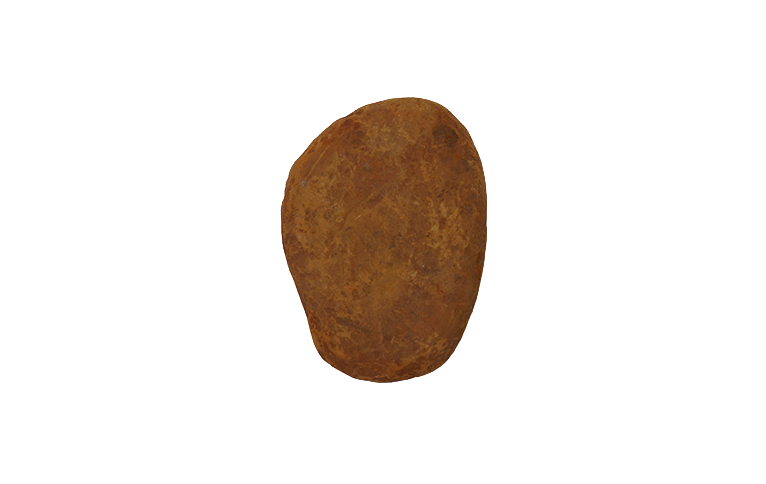
But where it falls on the curve isn’t what determines the category structure that we build idiosyncratically, because in addition to using factual distribution as a structuring tool we also ascribe meaning to individual pebbles (or objects, or people, or experiences), and that meaning creates a kind of metadata on any object we personally experience. I call it metadata because this personal meaning acts like a property of the thing, or an attribute of the thing which enables us to use personal meaning as a secondary filter for any number of ad hoc categories we use to categorize that thing, or any particular thing in our lives.
Even if something is not a prototypical example of the category it belongs to, it can be the prototypical example of an ad hoc category in our experience.
This is actually why introspection is a bad tool for generalizable psychology and why anecdotes of idiosyncratic behaviors remain observational until a critical mass of instances can reshape the core of the category. You can’t trust the edge to define the center of a category, but that’s a granularity issue, not an essentials issue.
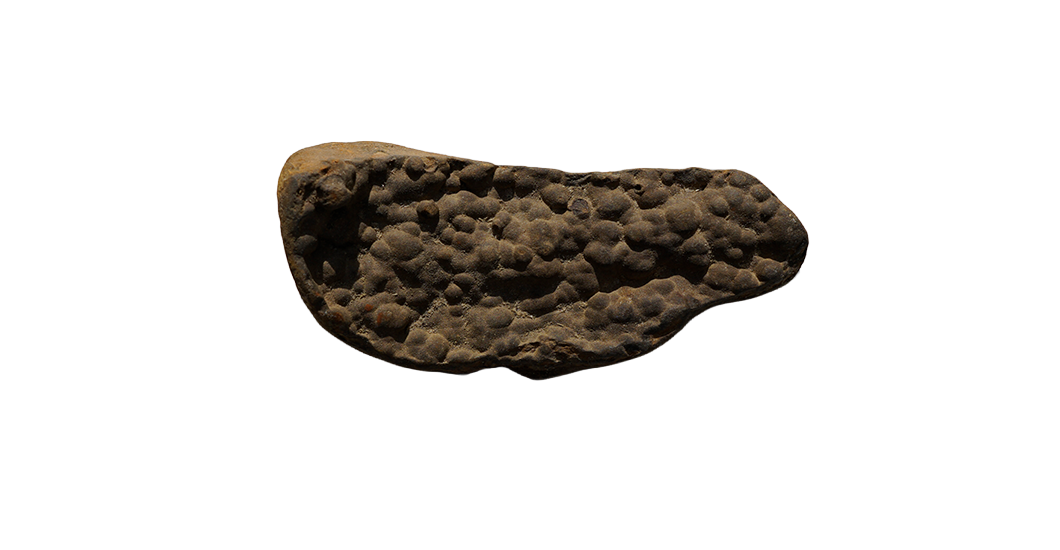
It’s also a perspective issue. And perspective, when it stands in for perception is the tool for establishing an argument that can become truth, once perception at scale across a population permits it to be truthful.
So when I pick up a pebble, and I feel like it is representative of the category, and I attend to that object in a way that I really believe it is the Platonic ideal instance of pebble, the paragon of pebble, it’s going to take exposure to a sufficient number of other different pebbles to unseat that perception. And if I share my perception as my perspective, it doesn’t make my perception representative of the actual ideal category pebble with respect to all pebbles from all time in all places. But to me it can be the center of a very important story, and thus it becomes valid as the ad hoc prototype of pebble in my story. I think you can see how the fabric of this argument frays at every edge while also holding its structure to sufficiently clothe the premise.
Since categories are continually reshaped by encounters with individual instances, then accumulation becomes a dataset. A collection allows us to encounter not one pebble, but thousands, and this scaling up simultaneously results in an abstraction as all pebbles blur together and an emergent clarity as an edge-defined prototype emerges from the set of inputs.
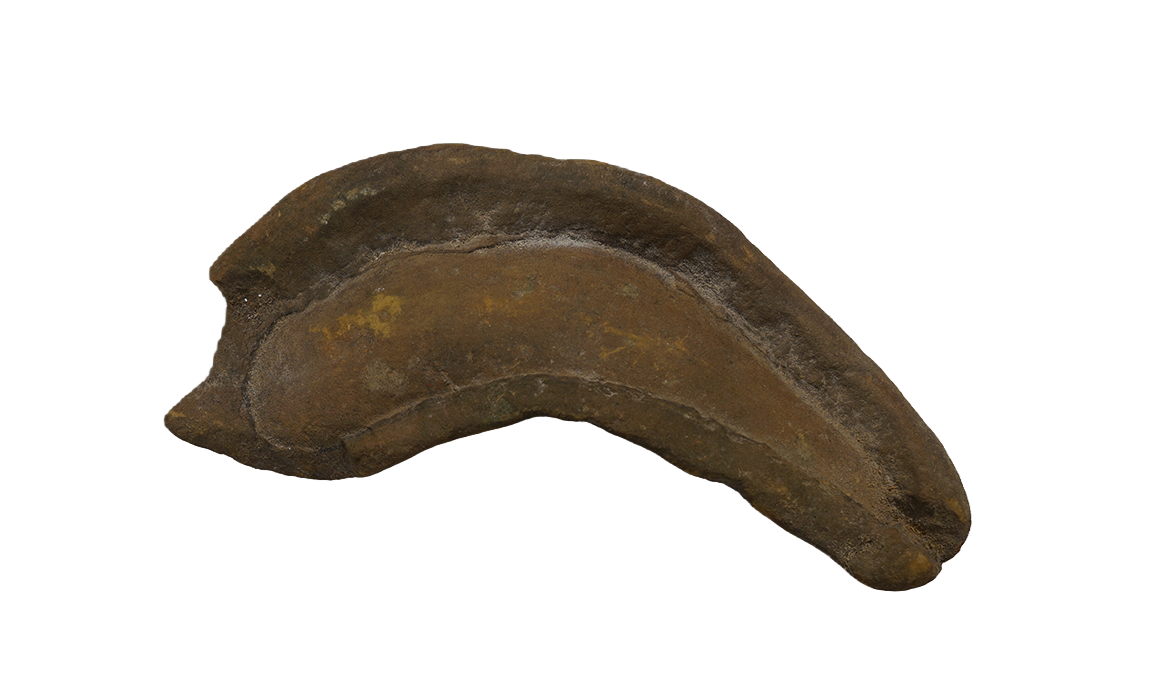
At that point, we don’t need to ask if any particular object is representative of the category because the category is fluid and adapting as each new example is added to the accumulation. In systems theory, this is a foundational aspect of complex adaptive systems of systems. Categories reorganize themselves as examples accumulate.
As a scientist, I am attune to this line of reasoning because I’m committed to falsifiability as a core tenet of validity. But as an artist, I am equally committed to the deniability that quotidian phenomenology permits us to establish a truth through the assignment of personal meaning (via ad hoc categorization), to give each of us the leading role in the construction of our personal experience of life.
This is wildly expanding to more than I intended to write, so I’ll bring it back on track: composite images have been one way that I have explored the problem of many instances structuring a category into a defining ideal. By compressing many observations into a single image as layers, and drawing out their statistical relationship (such as the standard deviation pictured in this next image), the structures provided something that no one photograph can contain.
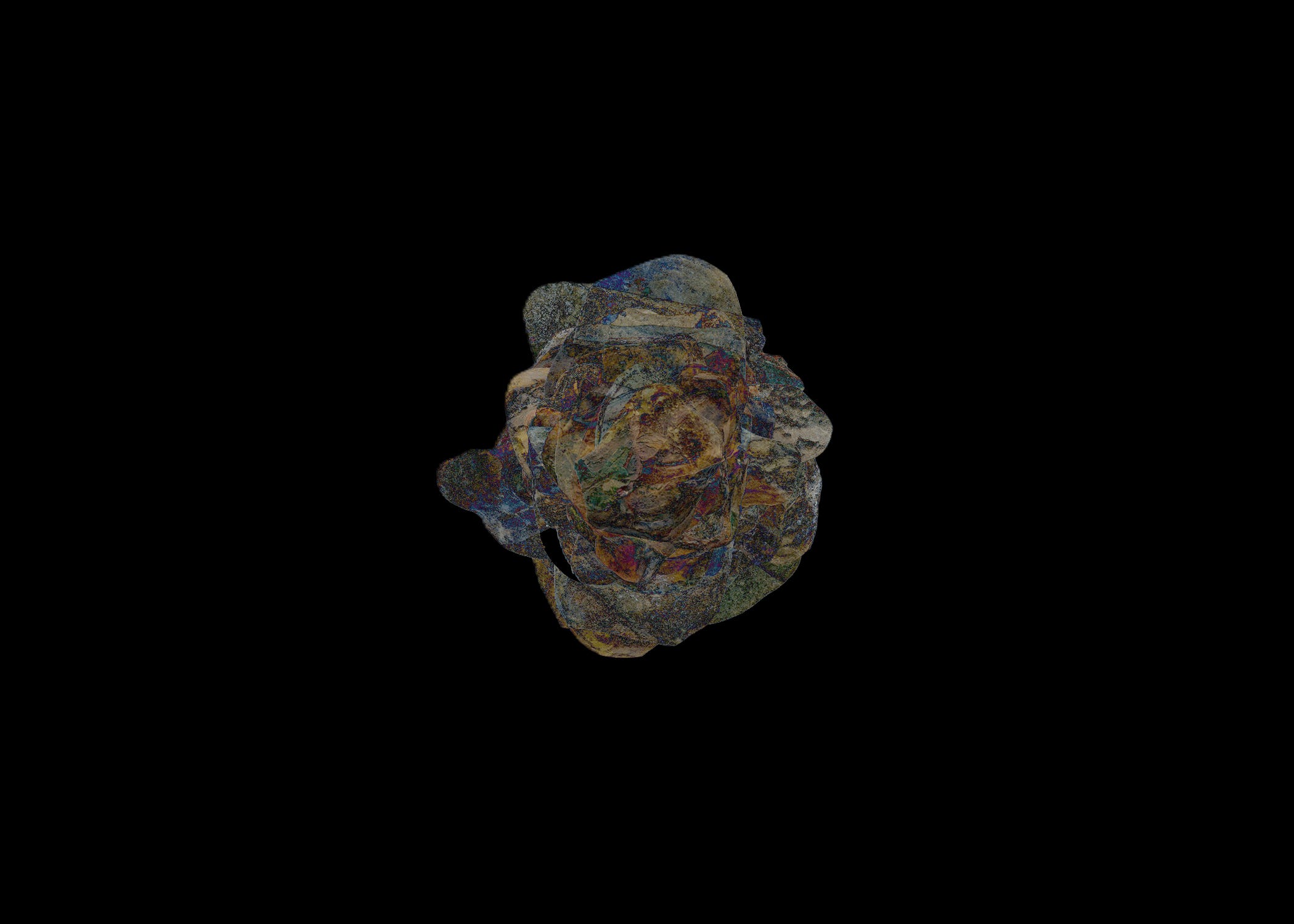
But at a certain point, stacking and processing images of stones gets boring, and I eventually became interested in a different possibility.
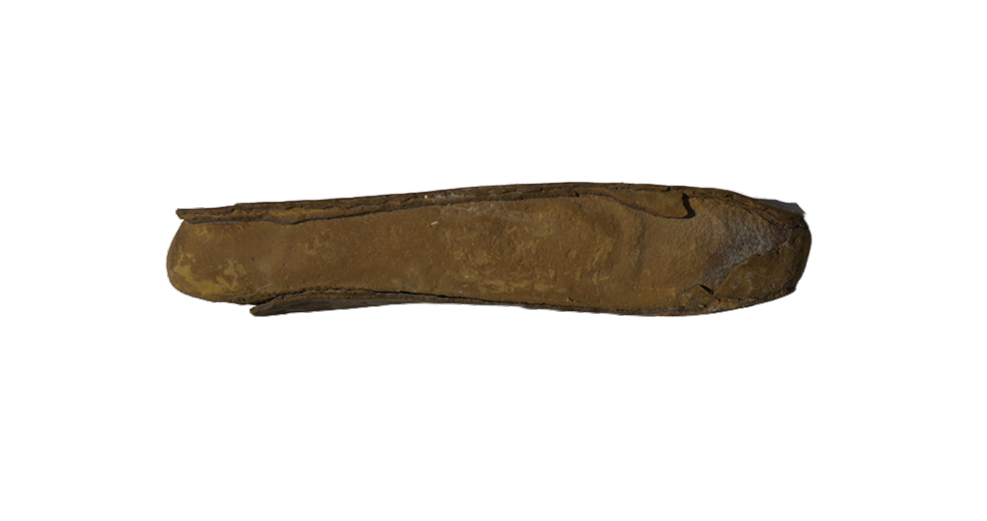
What would happen if the observations could remain distinct? What if instead of collapsing layers into a single image, I could distribute the accumulation through time?
So I took thousands of images of a single type of pebble (concretions, depicted throughout this post) and hand built sequences that I set in motion to let the ideal form emerge on the screen over time as the ghost image or afterimage produced by seeing all stones in rapid succession.
Concretions are physical manifestations of category formation because they become themselves through accretion. They develop a central core around which material accumulates in successive layers until the process terminates in a boundary edge and rests as a discrete object embedded within a sedimentary matrix. There is little ambiguity about what is and is not a concretion. They are singular objects distributed through clay beds, making them remarkably similar in form to the structure of a category itself.
I could have made a similar study of glacially transported pebbles or crushed limestone, both of which are thematically coherent with my broader geographic interests, but concretions are already material models of categorization. They are objects that literally become themselves through the accumulation of defining characteristics.
Their connection to the Great Lakes is equally important to me. Most concretions in my collection were revealed by glaciers, contrasting them with other stones I collect which were transported and shaped by glacial cycles in the region. Glaciation excavated, transported, concentrated, and exposed these concretions throughout the region, making ancient sedimentary processes available as contemporary encounters distributed by ice into landscapes where they could be found, collected, compared, and eventually assembled into categories of their own, and eventually subcategories of subcategories as nuances emerge across examples.
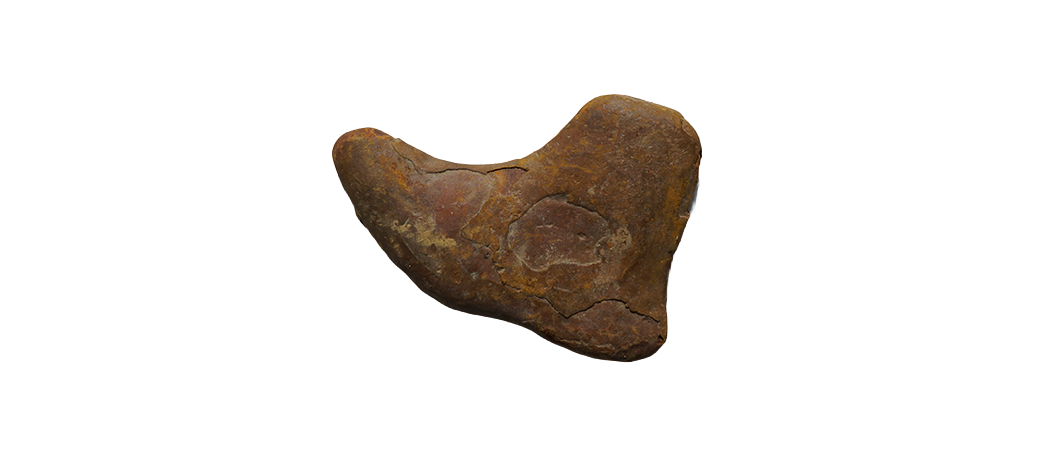
In order for an emergent prototype to appear, the images cannot simply overlap like they have in my static images. It is necessary to encounter them sequentially because the category is assembled through duration and exposure.
Time becomes the medium through which accumulation becomes perceptible, and that gave me the exact conditions I needed to use motion as a processing mechanism.
The result of this line of inquiry became a short film titled σ μ [Sigma Mu]. Constructed from more than two thousand photographs of concretions, the work uses sequential exposure rather than statistical compression to investigate how categories emerge through accumulation. The film will be screened publicly later this year, but for now I am less interested in presenting the work itself than in describing the question that produced it.
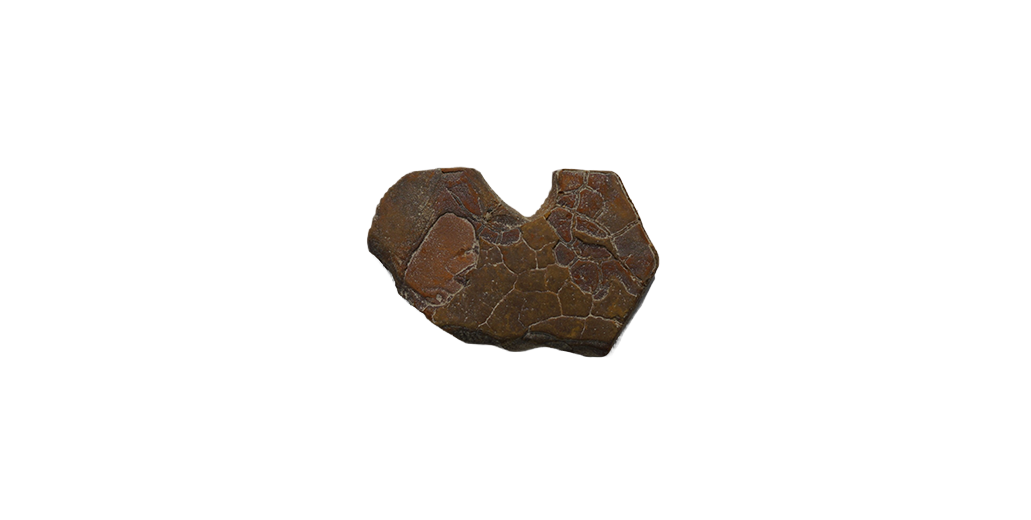
The history of motion and the sequential transition of images in a timeline certainly echoes Muybridge, and the connection bounces through my musing, but we differ in our goals since I am not using motion for the sake of animation. I am using kinematics to establish a kind of filtering to encourage emergence of an ideal form. Motion is incidental to the task, and speed is the variable.
It’s more like setting up Neo to learn Kung Fu than to have a horse gallop across a flickering field of view.
In The Matrix, when Neo plugs in and all of Kung Fu as a discipline is loaded into his brain, it is near instantaneous programming. You see his body twitch as he develops muscle memory as he rapidly learns all possible expressions of Kung Fu before coming to and uttering "I know Kung Fu" which is absurd in the human understanding of what it means to master the discipline of Kung Fu that takes a lifetime.
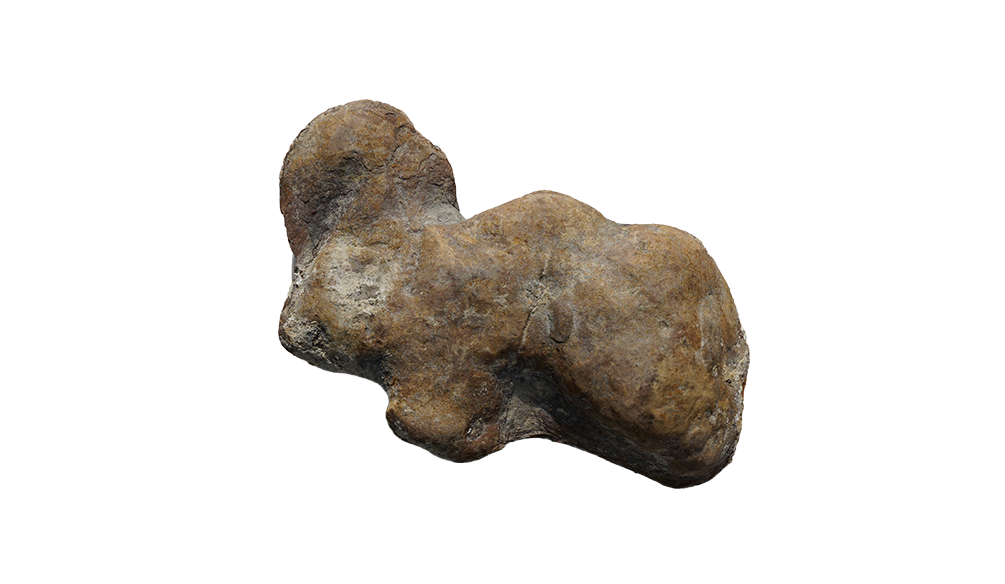
It is absurd precisely because real expertise develops through accumulation. The ability to spot an exemplar of a category, to decide if something is or isn’t a type of thing, emerges through exposure and personal capacity to process the sum of that accumulation as meaningful.
But I want to acknowledge the limitation of imagery, it cannot fulfill the sensory range required to establish full knowledge of the category depicted in visual terms. The fantasy embedded in the Neo scene is that a category can be downloaded whole. That expertise can be transferred without experience. But categories are not only visual structures. They are embodied accumulations of encounters.
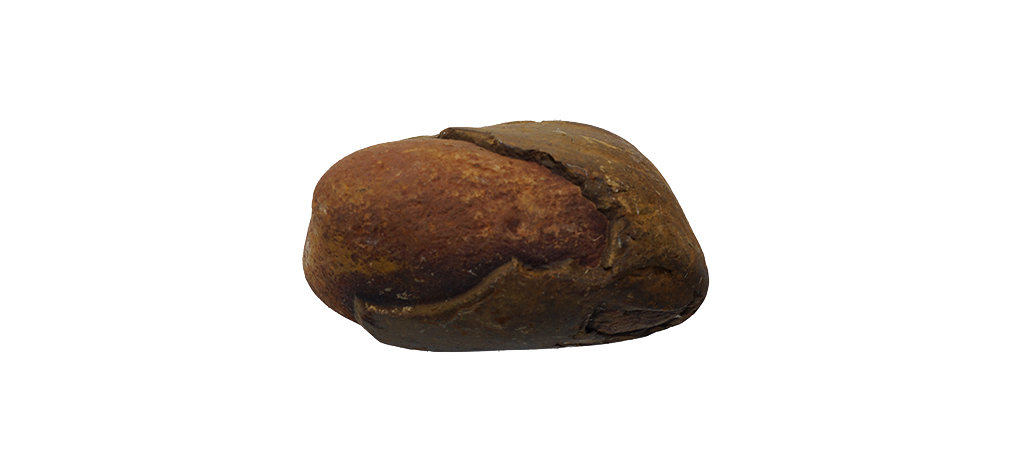
You can learn something about concretions by seeing a thousand of them in rapid succession, but you cannot know concretions through images alone. You have to feel a thousand stones. You have to know which ones unexpectedly feel heavy. Which ones leave dusty pigment on your fingers. Which ones haven’t had their shells opened yet. Which ones fractured in the last freeze-thaw cycle. Which shells contain ochre cores, and which are likely red. You have to carry them, sort them, lose them, and find them again, get to the point that you don’t even care to pick one up because you can tell just from looking at it whether or not its something you need to add to your collection.
I know concretions.
And that’s it. The essential truth of expertise is accumulating an abundance of experience to the degree that if you pick something up, it now can be called curation instead of hoarding. The value of the thing is the cost of effort that you spend accumulating the knowledge to know if the expenditure of future effort will be worth it, or the wisdom to know if it simply dilutes the collection. In other words, knowing something means knowing enough to know when to quit, and with that, I’ve exhausted my argument. Thanks for reading.