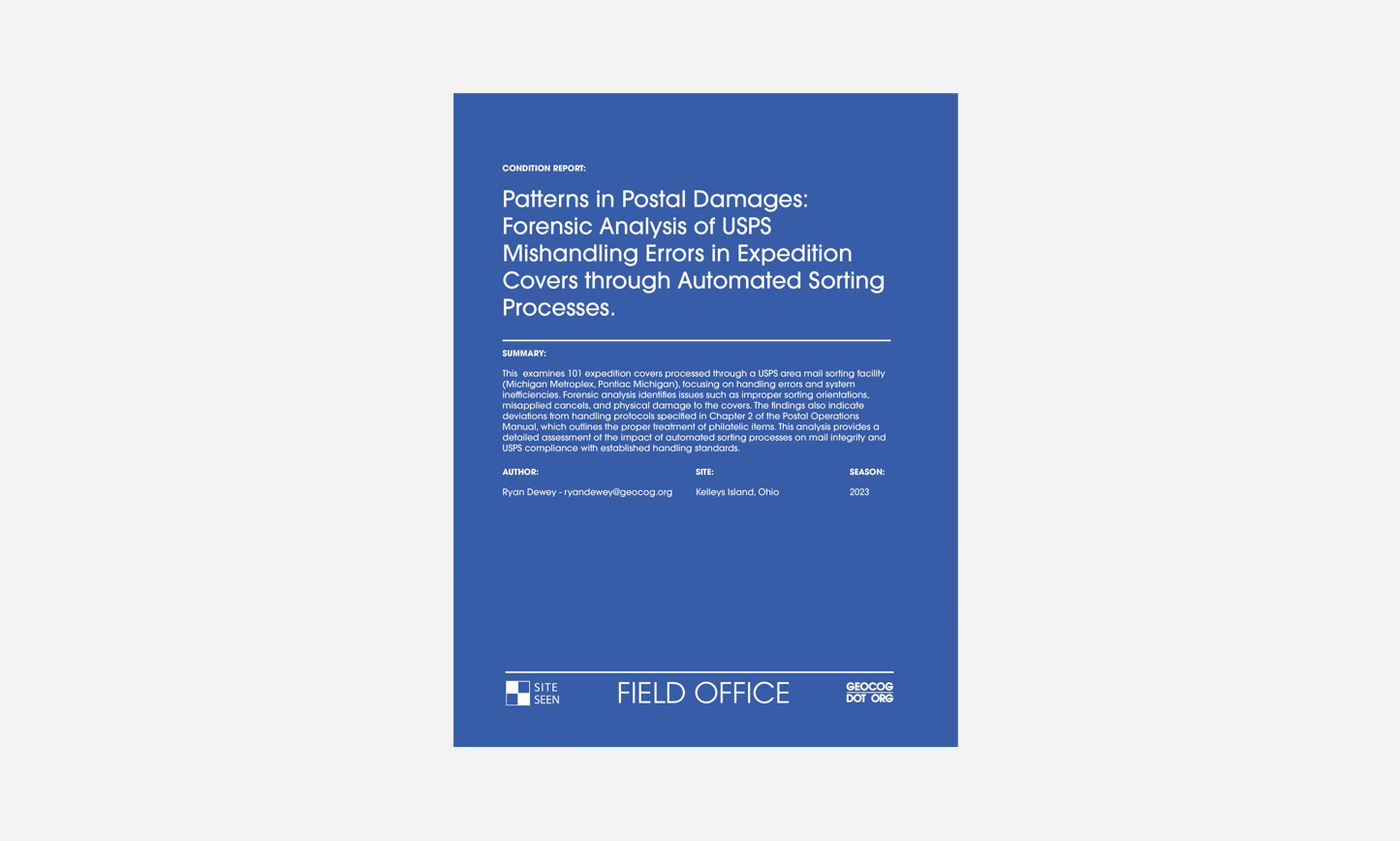
Patterns in Postal Damages: Forensic Analysis of Mishandling Errors in Expedition Covers through Automated Sorting Processes

Patterns in Postal Damages: Forensic Analysis of Mishandling Errors in Expedition Covers through Automated Sorting Processes
Origin: FIELD OFFICE (Practice)
Post Type: Research Documentation / Forensic Analysis
Date of Publication: 2025-09-05
Related Divisions: FIELD OFFICE, STUDIO, GEOCOG
Purpose: Document the handling, damage, and postal system interactions of 101 expedition covers, situating the analysis within expeditionary practice, philatelic protocols, and USPS operational realities
Author: RYAN DEWEY
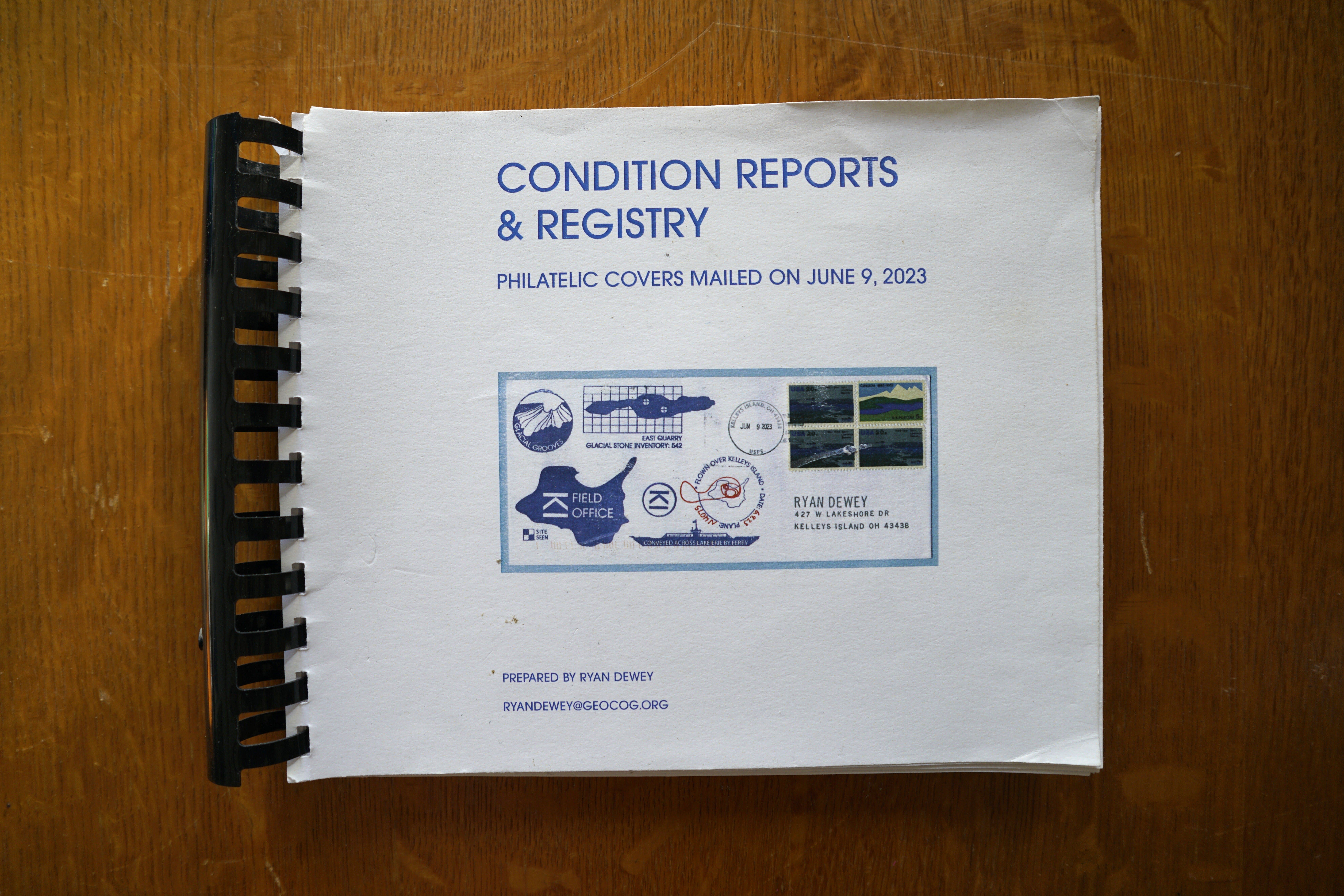
PATTERNS IN POSTAL DAMAGES
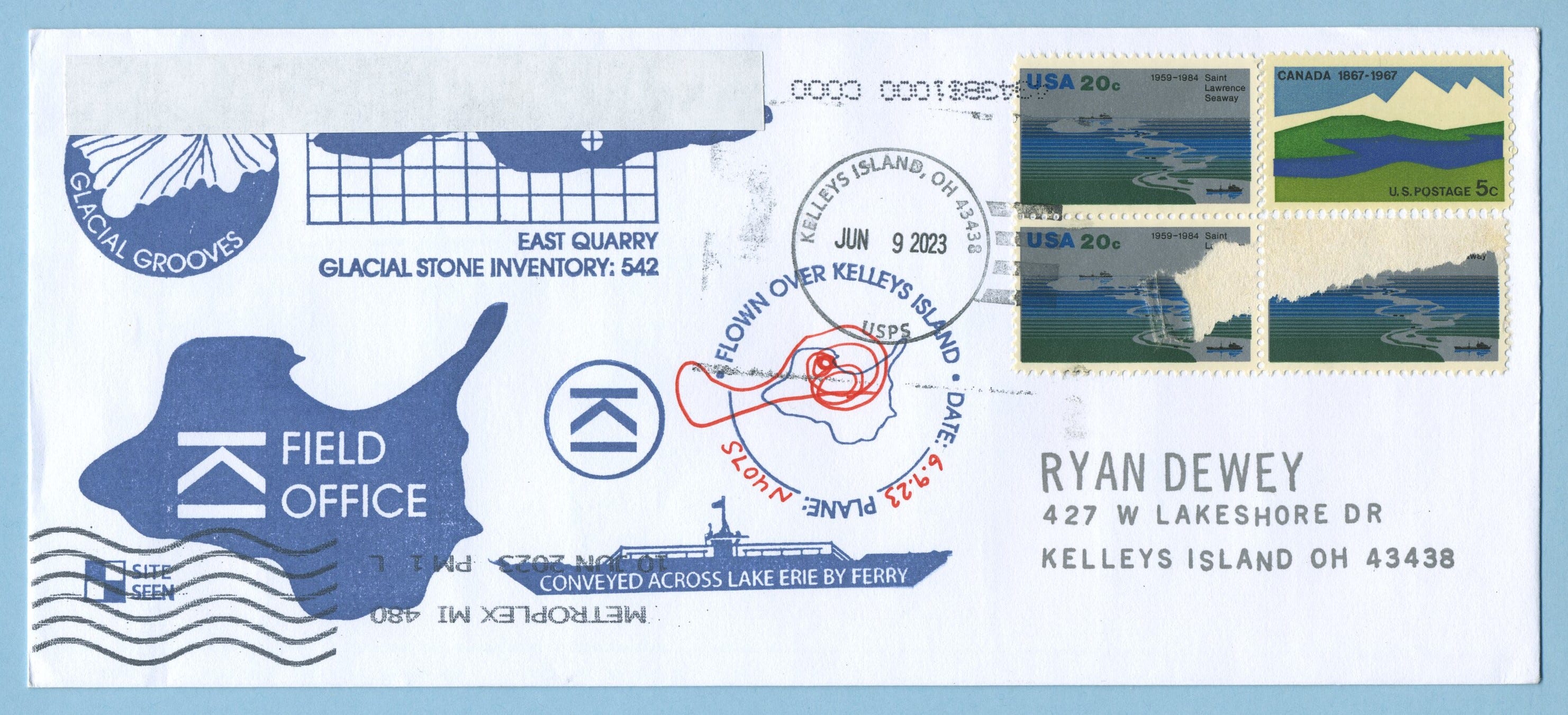
In June 2023, I produced an edition of 101 cacheted expedition covers as part of training activities for a forthcoming field project on Baffin Island. These covers were mailed to my temporary address on a Great Lakes island and processed through the USPS Area Mail Processing facility in Pontiac, Michigan. My intent was to sell them individually as records of my training activities, but I decided to keep them together because upon their delivery back to my address, the set of covers displayed extensive mishandling, including folding, scuffing, ink transfer, and misaligned cancellations, despite having been prepared in strict compliance with Chapter 2 of the Postal Operations Manual, which governs the proper handling of philatelic mail. I realized these covers comprised a corpus of mishandling as much as a record of my training activities.
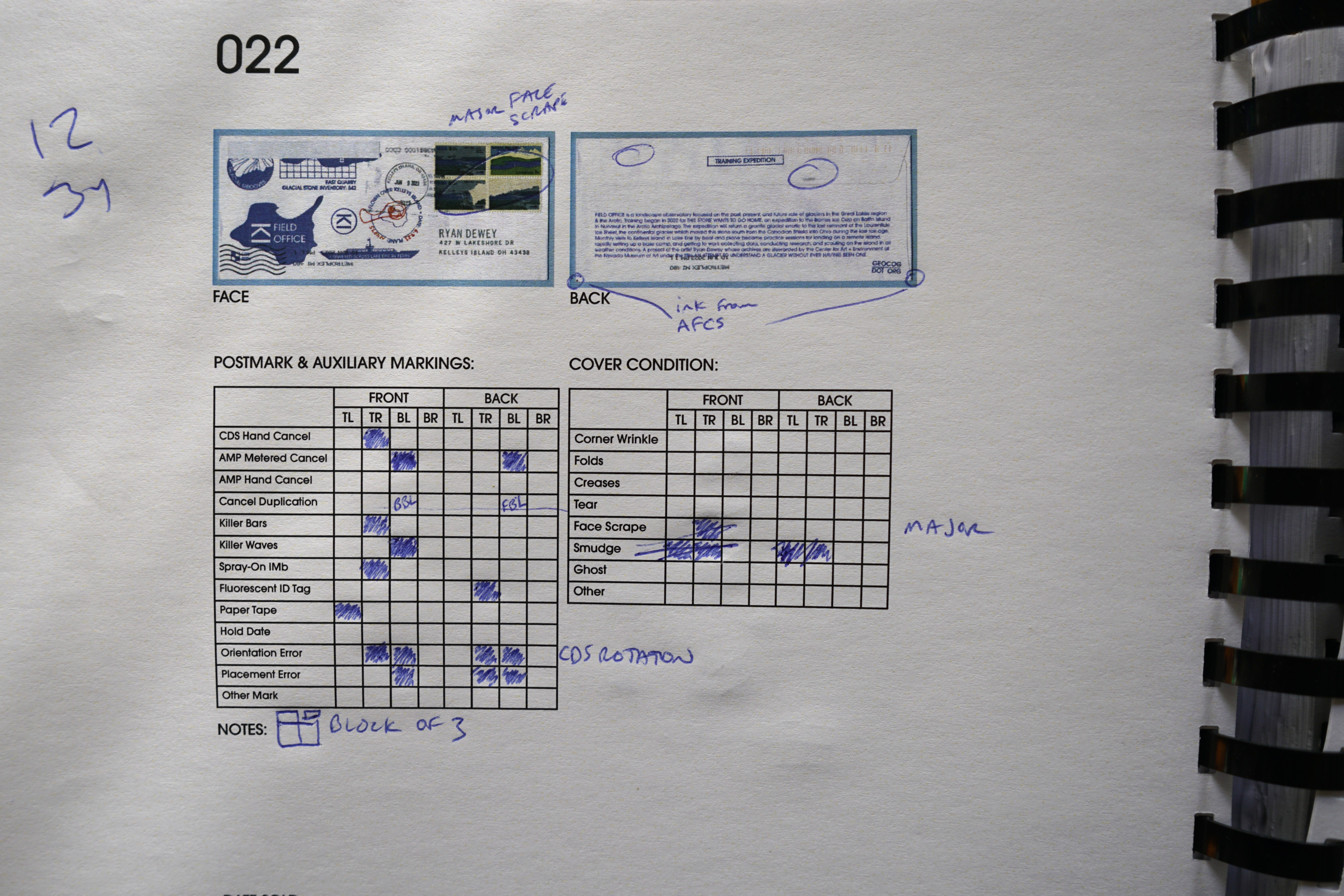
Initial examination revealed at least thirty-two distinct handling patterns across the set, suggesting repeated machine passes and inconsistent treatment during automated sorting. The degree of marking and physical distortion raised questions about both equipment and operator interventions. I sat down with Daniel Piazza, Chief Curator of Philately at the Smithsonian National Postal Museum, to look through my corpus and to see what his take was on the condition of these objects, and he helped me think through several factors that shaped my analysis, notably, the mismatch of phosphorescent tagging in the franking.
The covers incorporated mixed-era postage, including United States Scott numbers #1324 from 1967 and #2091 from 1984, and it was possible that differences in phosphorescent tagging could have caused sorting errors. The rigidity of the mail pieces was also considered, as early test mailings included cardstock inserts, whereas the bulk set did not. Volume-related processing and operator response to repeated rejects were another potential source of mishandling.
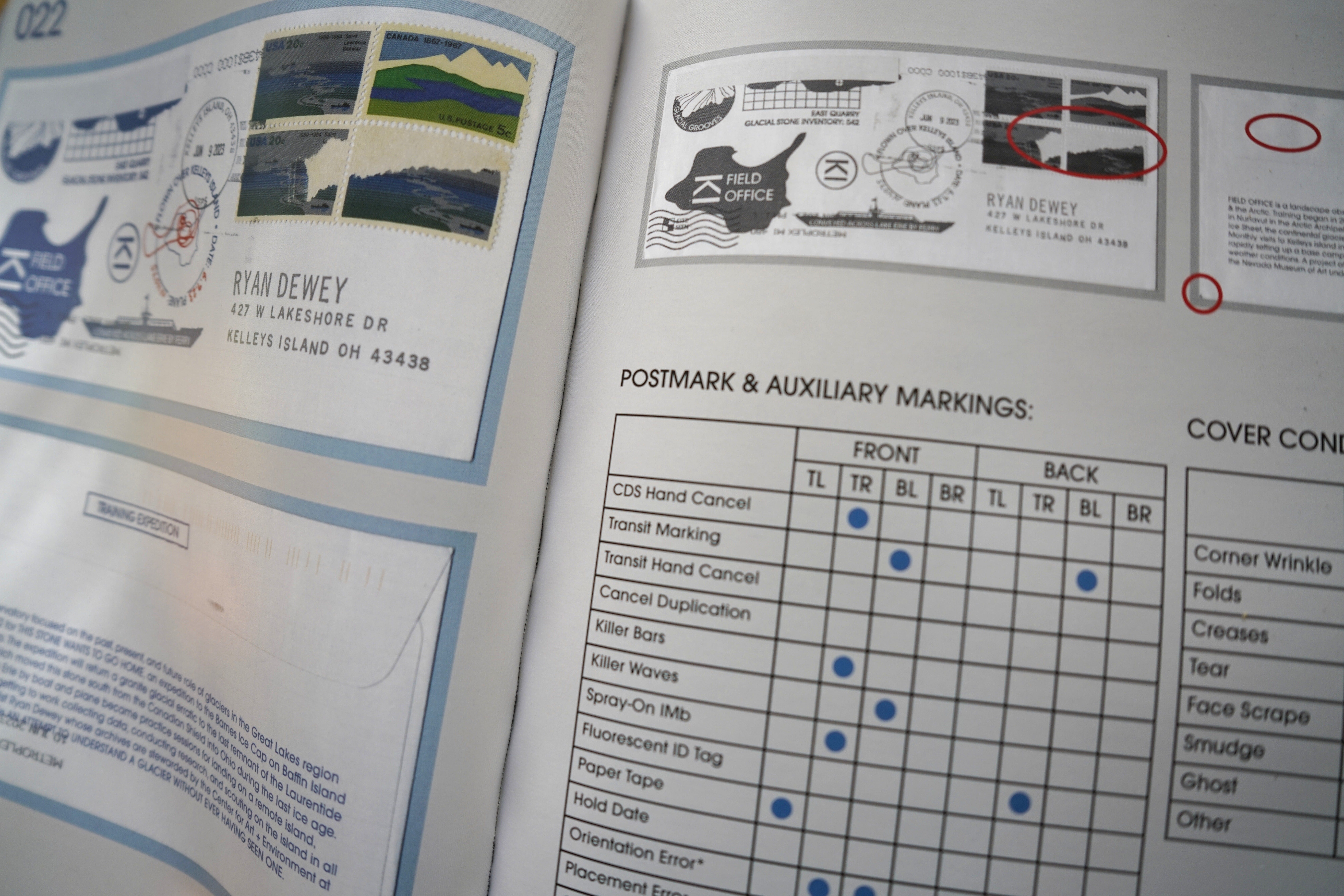
To investigate these factors, three controlled follow-up mailings were conducted. Early trials had already included covers with mixed postage supplemented by a clerk-applied contemporary stamp, so I needed the follow-up mailing as a control. When I received them back, these control covers showed minor wear consistent with multiple machine passes and slight offset from cancellations but no catastrophic damage. A set of covers using only the historic stamps arrived intact aside from minor back-flap transfer. Finally, covers franked entirely with contemporary postcard-rate stamps processed smoothly, emerging nearly pristine with only minor corner wear. Ultraviolet examination at both 254nm and 365nm confirmed that both historical stamps carried some phosphorescent tagging, nearly eliminating stamp selection as the primary cause of mishandling, although it is still possible that slight variations in the age of the phosphorescence across mixed-era stamps triggered a kick-back in the automation, but importantly all stamps used did phosphoresce. Rigidity likewise did not account for the damage, as the contemporary-only covers lacked cardstock yet arrived undamaged.
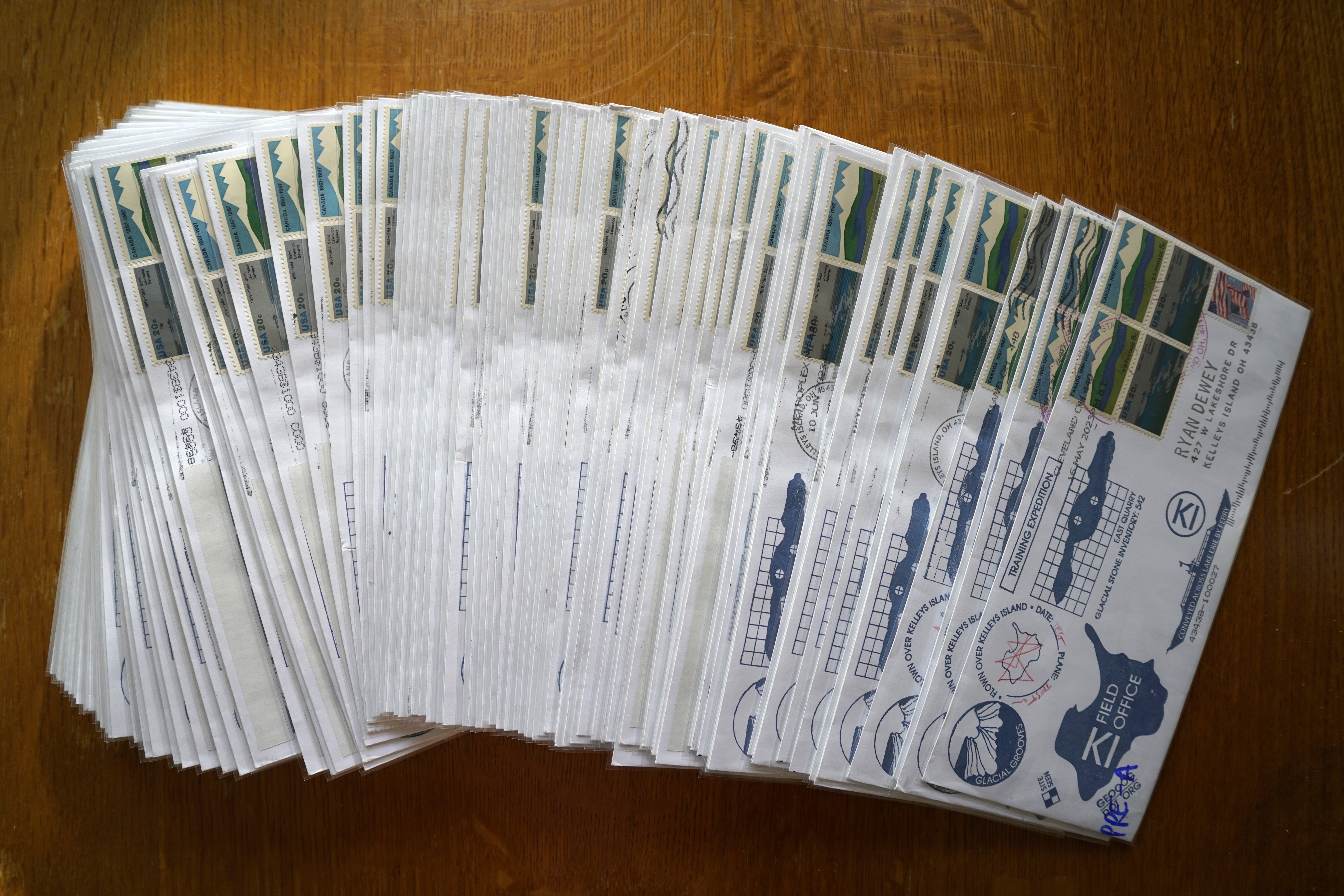
The evidence suggests a more plausible cause: that the extensive mishandling observed in the bulk mailing was the result of operational conditions at the Pontiac facility rather than deficiencies in the stamps or cover construction. High-volume sorting, compounded machine rejects, and operator interventions produced the multiple forms of physical distress. The corpus demonstrates how expedition covers interact with contemporary postal systems and how adherence to philatelic handling protocols can vary in practice. If some of this sounds familiar, it is because I have previously written about this corpus here.
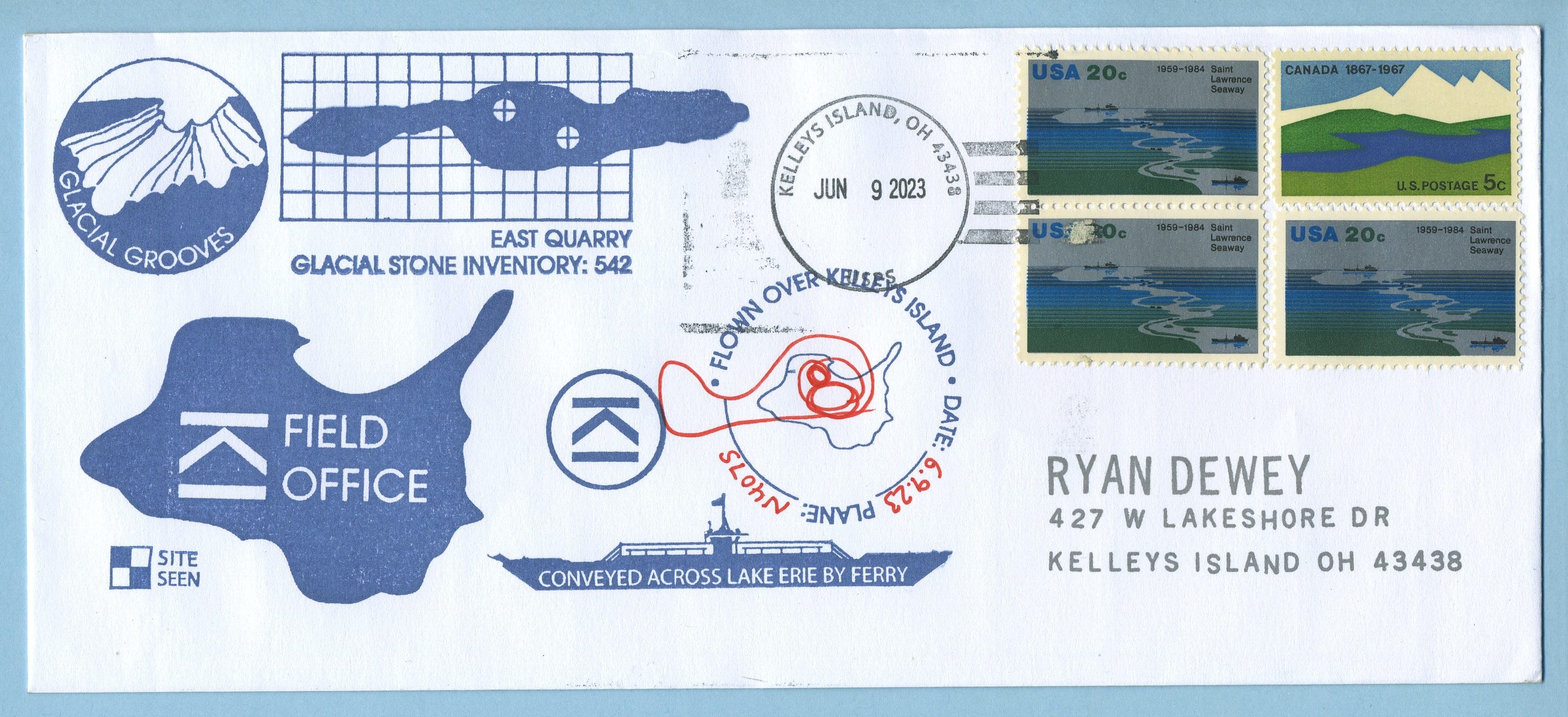
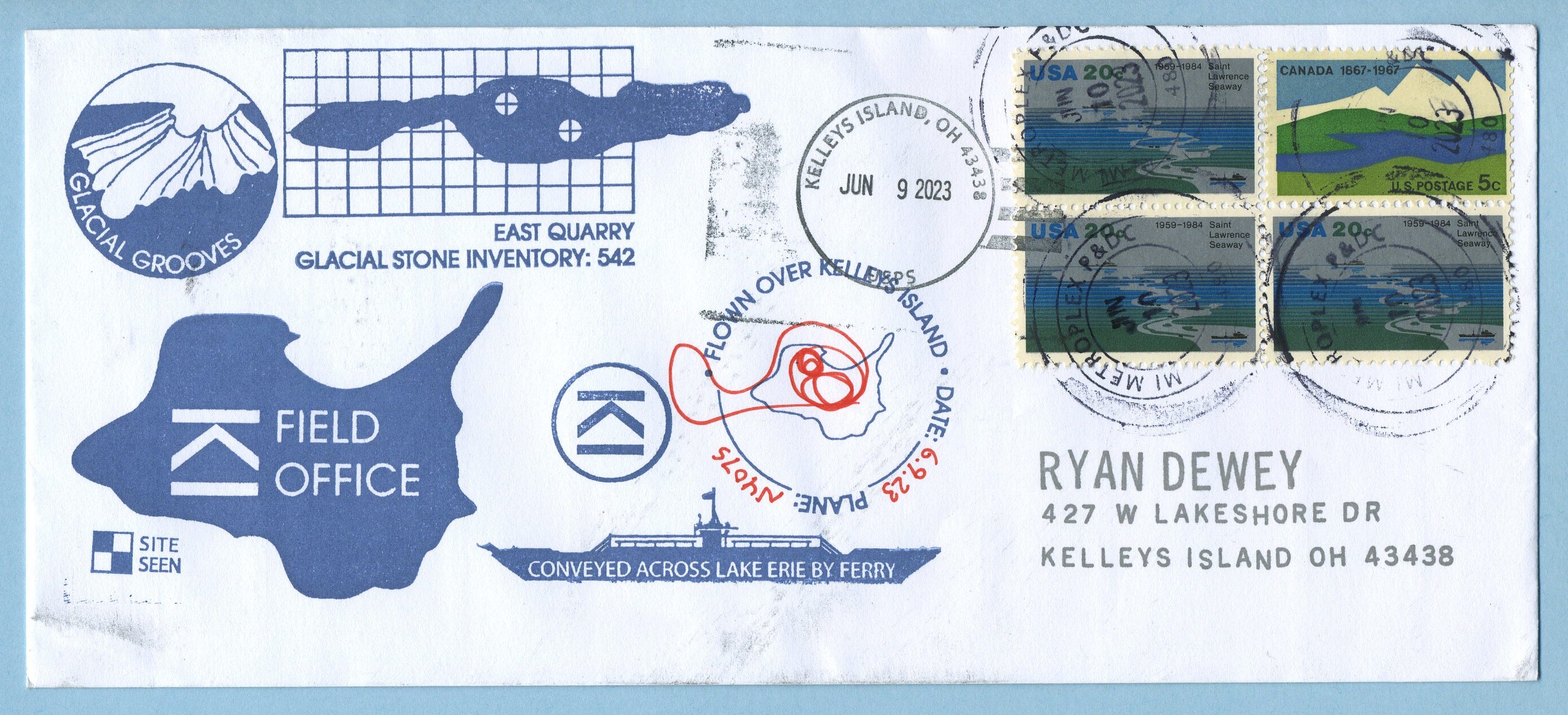
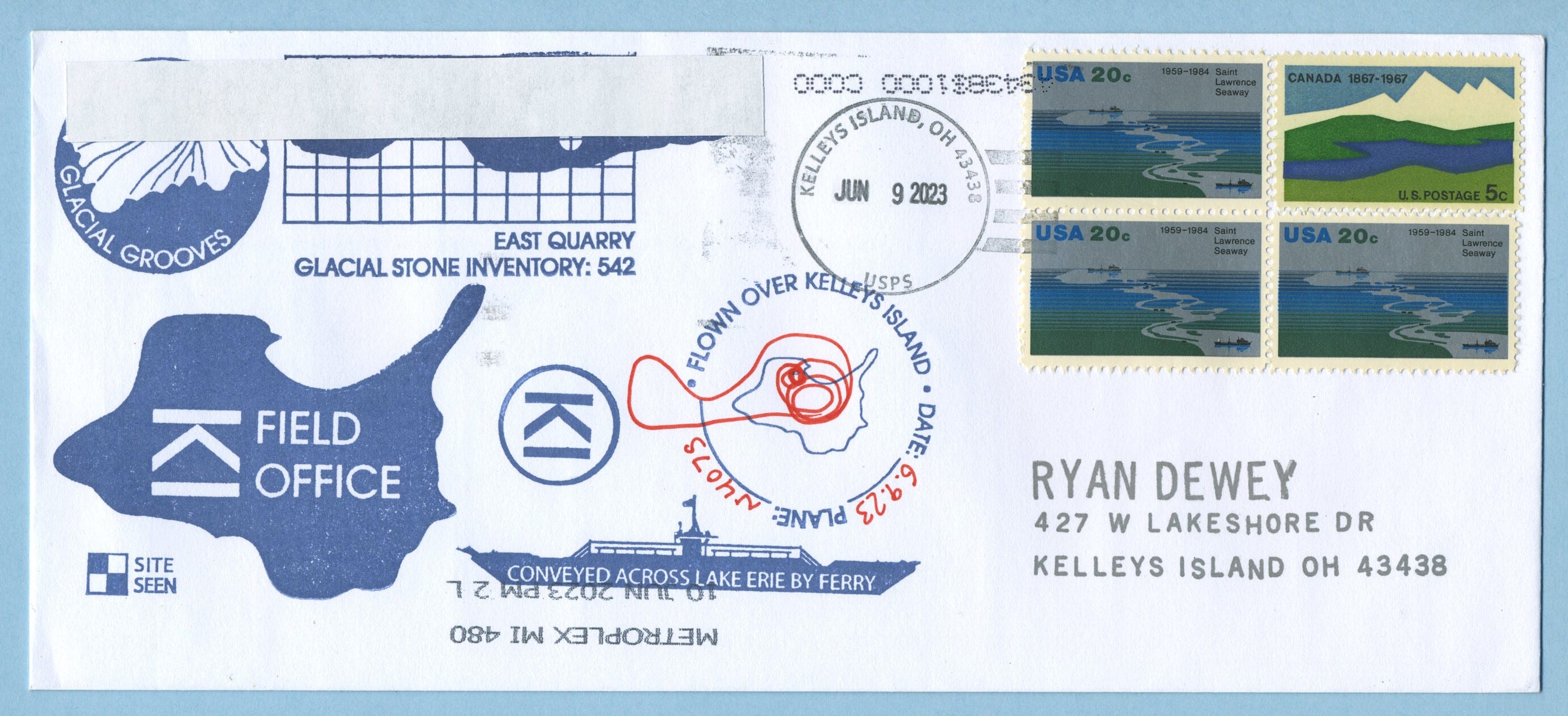
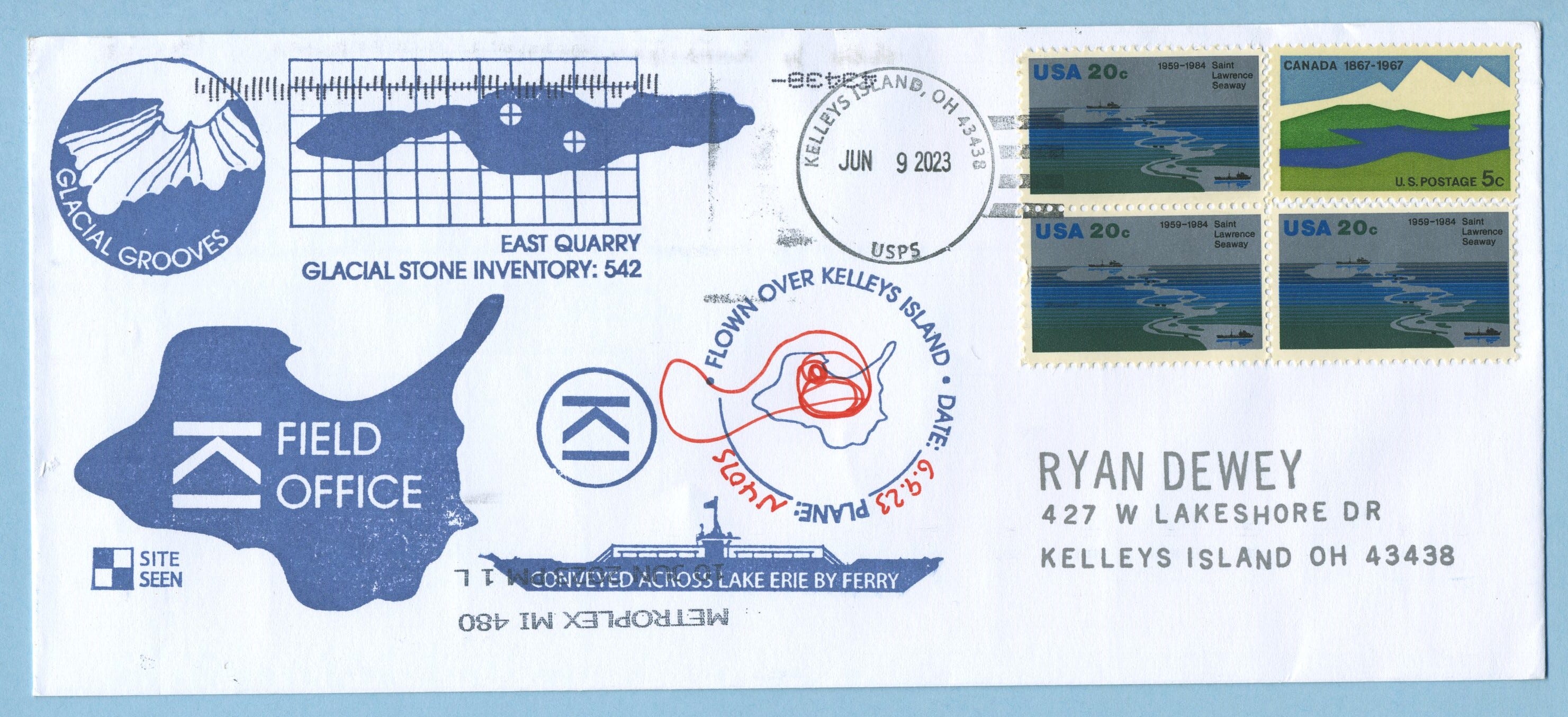
These covers function simultaneously as field records, philatelic artifacts, and studio objects. They document training-stage expeditionary activity while engaging with real-world postal operations, producing material evidence of both procedural and environmental contingencies. The patterns of damage, the misapplied cancellations, and the physical distortions all form part of the story of their circulation.
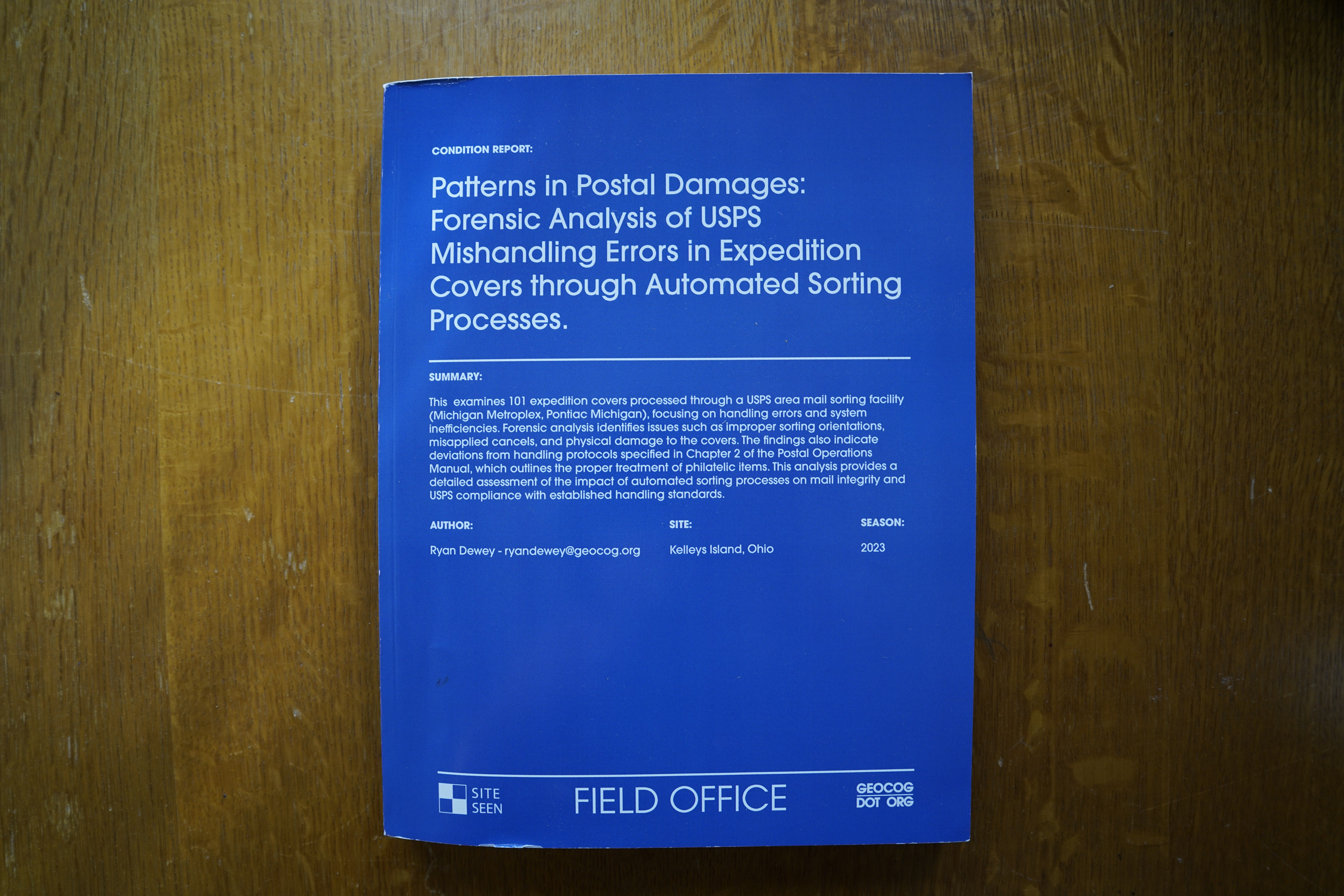
The full set of 101 covers is available for exhibition and institutional acquisition, and enquiries are welcome. Selections have been exhibited previously, while other covers have never been publicly shown. This project is intended as a foundation for understanding how contemporary expeditionary mail operates, both in relation to philatelic practice and in the broader context of FIELD OFFICE documentation.
RYAN DEWEY
ABSTRACT
This article examines a set of 101 cacheted expedition covers processed through the USPS Area Mail Processing facility in Pontiac, Michigan, in June 2023. Forensic analysis of the returned covers identifies extensive handling errors, including folding, scuffing, ink transfer, and misaligned cancellations, despite compliance with philatelic handling protocols. Controlled follow-up mailings indicate that the damage resulted from operational conditions, high-volume processing, and operator intervention rather than stamp selection or cover construction. The study situates these covers as both field records and philatelic artifacts, highlighting how expeditionary mail interacts with contemporary postal systems while producing material evidence of circulation, mishandling, and procedural contingencies. The full set is available for exhibition and acquisition.
Keywords: Expedition covers, Postal history, Philatelic items, Mail integrity, Forensic analysis, Postal handling errors, Automated mail sorting, Postal Operations Manual compliance, Michigan Metroplex, Mishandling patterns, Postal system inefficiencies, Improper sorting orientation, Misapplied cancels, Postal damage analysis, Philatelic condition reporting
All United States postage stamp images depicted in this publication are © United States Postal Service. Images are reproduced solely to illustrate philatelic items included in commercial availability of this body of work, in accordance with Chapter 2, Section 282 of the Postal Operations Manual. All images remain unaltered for compliance with USPS requirements and are used strictly in the context of this research, documentation, and items offered for sale or exhibition. Inquiries regarding acquisition or exhibition are welcome.