
Postcards from Around the Great Lakes
Documenting a practice in real time from field-dispatched postcards

ABSTRACT
This article documents postcard-based field records produced during training and regional travel across the Great Lakes between 2022 and 2023. These postcards operate as hybrid artifacts, functioning simultaneously as correspondence, material samples, and philatelic objects, while moving through active postal systems.
Two bodies of work are presented: training dispatches from Kelleys Island and the ongoing SITE SEEN project. Together, they position postcards as a preparatory and exploratory mode of expeditionary philately that preserves postal context while prioritizing field observation and movement.
Keywords: Postcards, Great Lakes, Expeditionary philately, Postal history, Field documentation, SITE SEEN
INTRODUCTION
In the first two articles in this series, I argued for the inclusion of expedition training artifacts within the scope of polar philately and described a set of training expedition covers produced on Kelleys Island as proof-of-concept objects. This third article shifts focus away from covers and toward postcards, not as a lesser philatelic form, but as a distinct communicative device with different affordances.
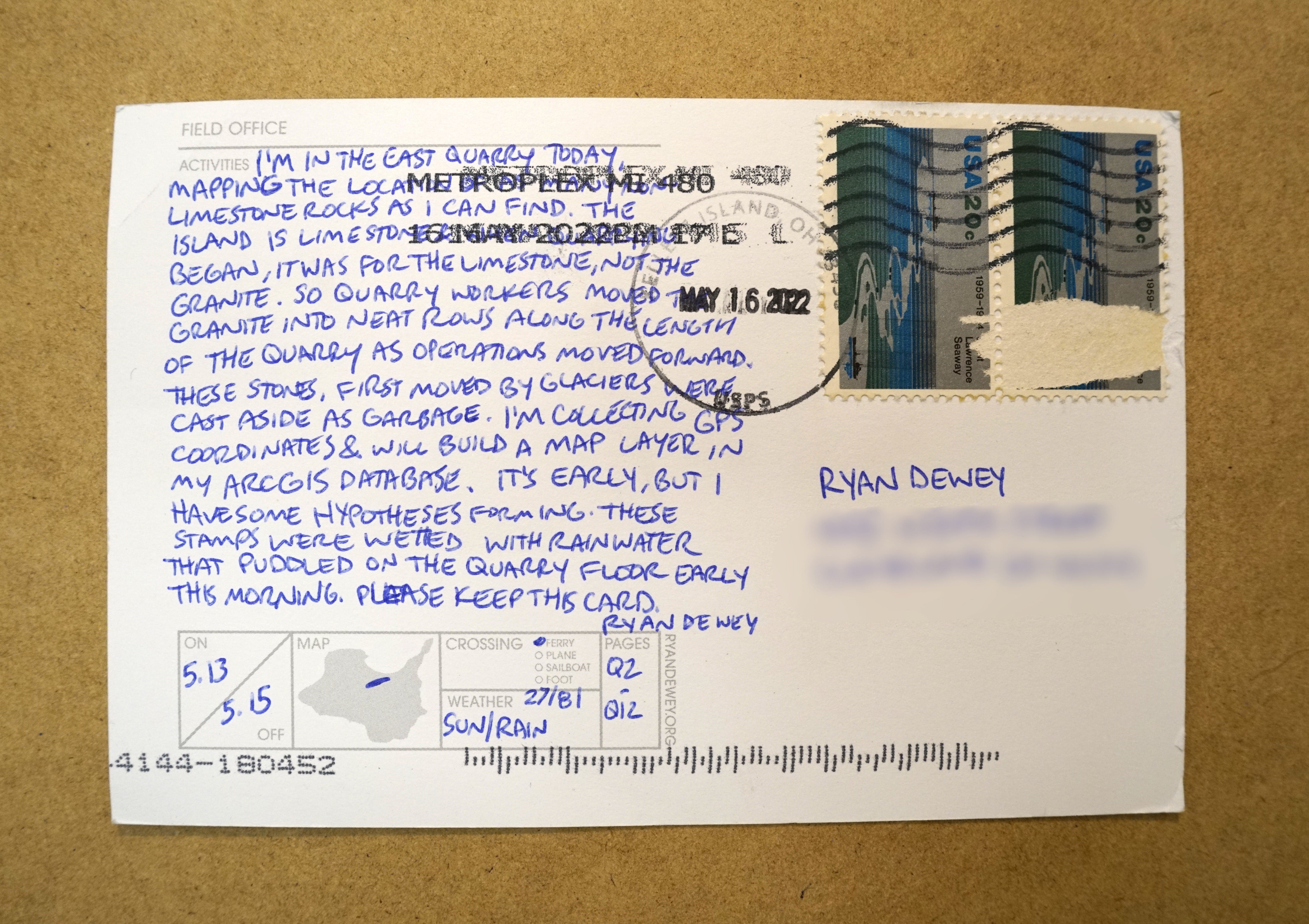
Postcards operate closer to the hand, closer to daily movement, and closer to improvisation. Where covers tend to be ceremonial, postcards are opportunistic. They allow for faster response to conditions, quicker inscription, and more frequent dispatch. For my purposes, they have also proven to be a primary mechanism for philatelic outreach, introducing postal artifacts to audiences who are initially drawn to content rather than to philately itself.
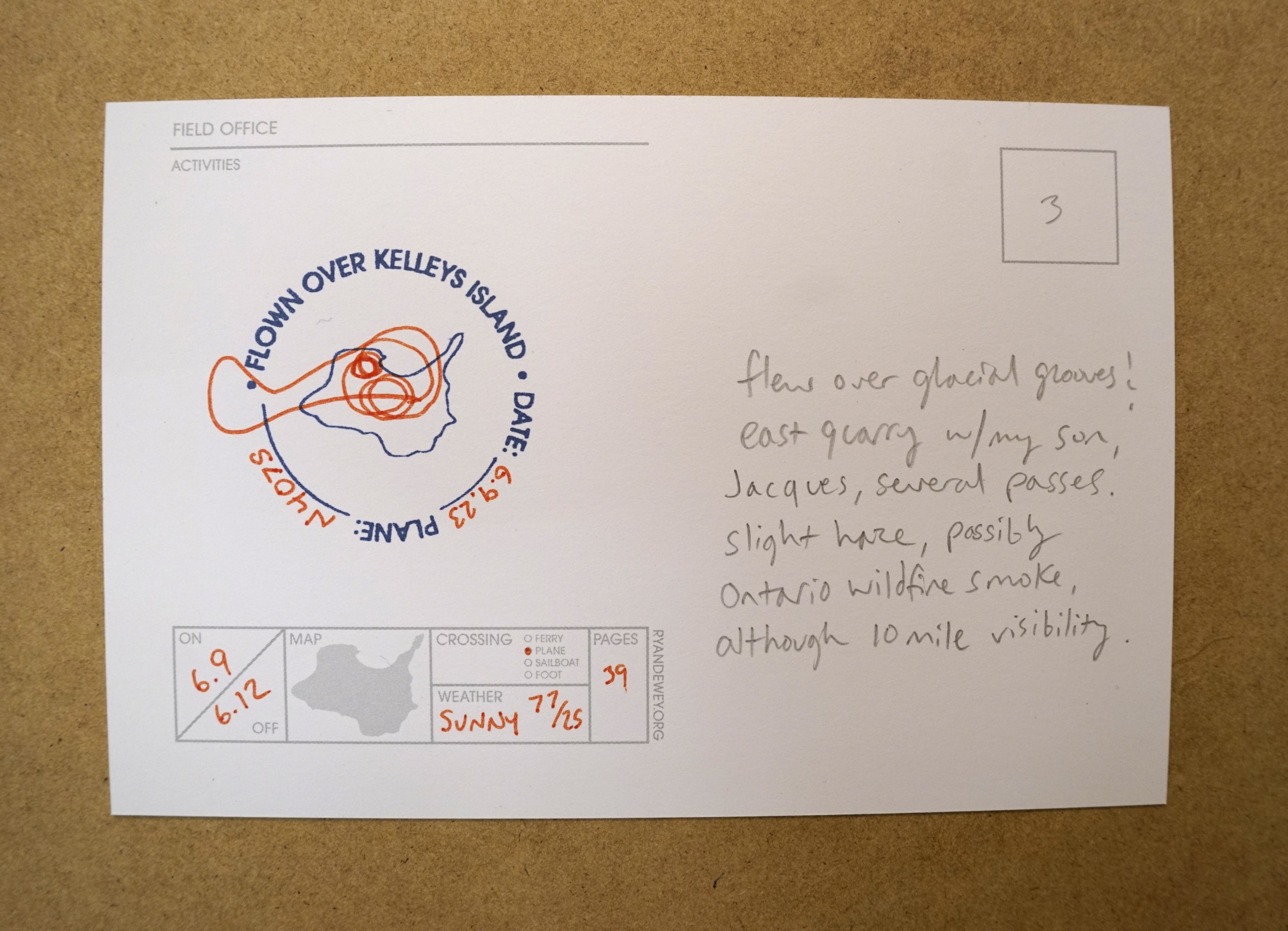
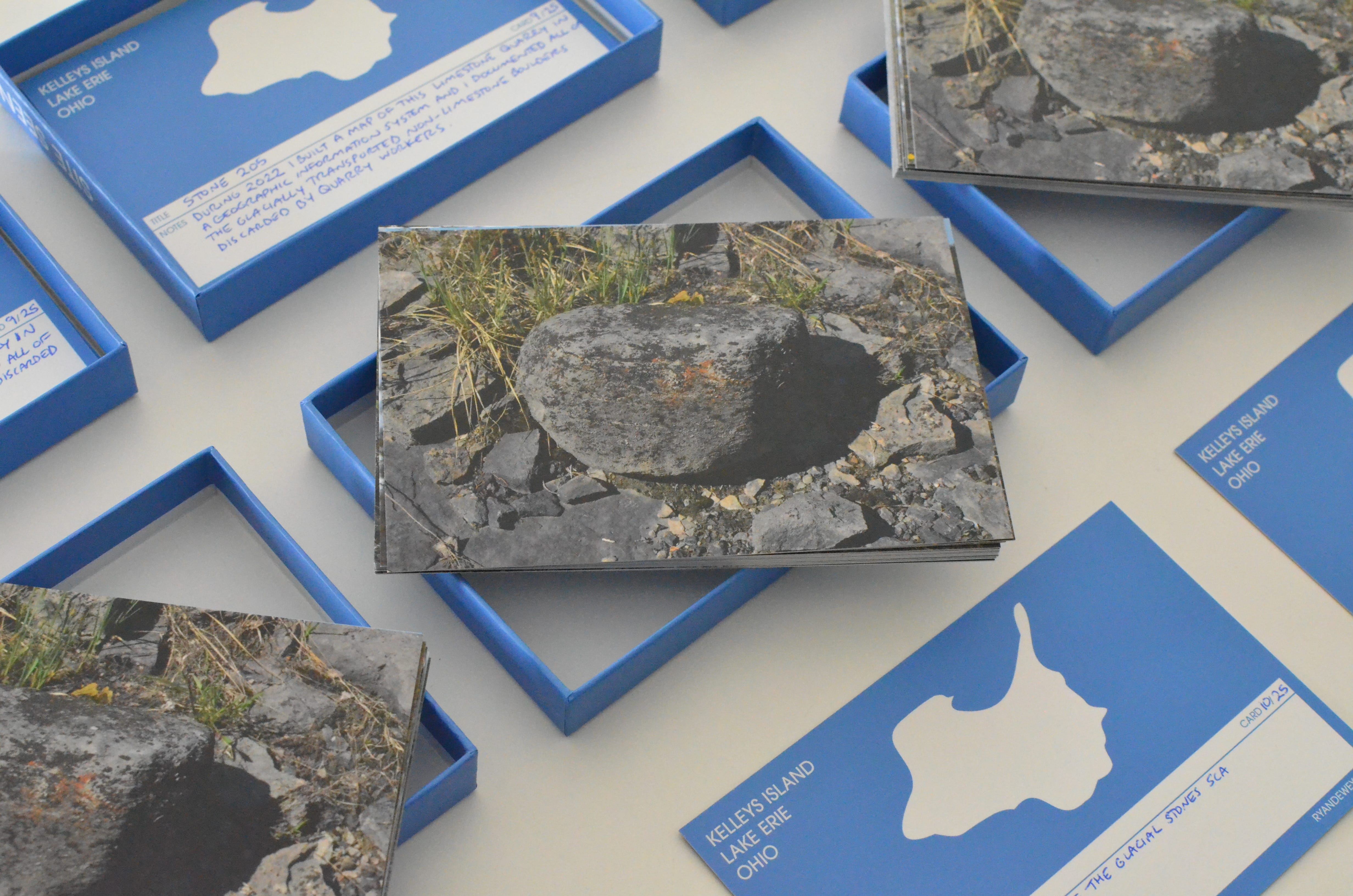
Between 2022 and 2023, I produced several postcard-based projects tied to my expedition training, my broader research into post-glacial landscapes, and my ongoing movement through the Great Lakes region. Some of these postcards were sent individually, others as part of boxed dispatches to subscribers, and others as roaming field records mailed intermittently as conditions allowed. Collectively, they form a parallel corpus to my covers, one that privileges immediacy, material variation, and accumulation over formal completeness.
This article introduces those postcard projects and examines how they function simultaneously as field records, narrative artifacts, and gateways into philatelic thinking for non-specialist audiences. I’ve written before about the role of QSL cards, DXpedition, and expedition-related postcards in the inspiration of my postcard designs. This article documents the function and distribution of the cards I produce for my roving landscape observatory practice.
POSTCARDS AS FIELD RECORDS
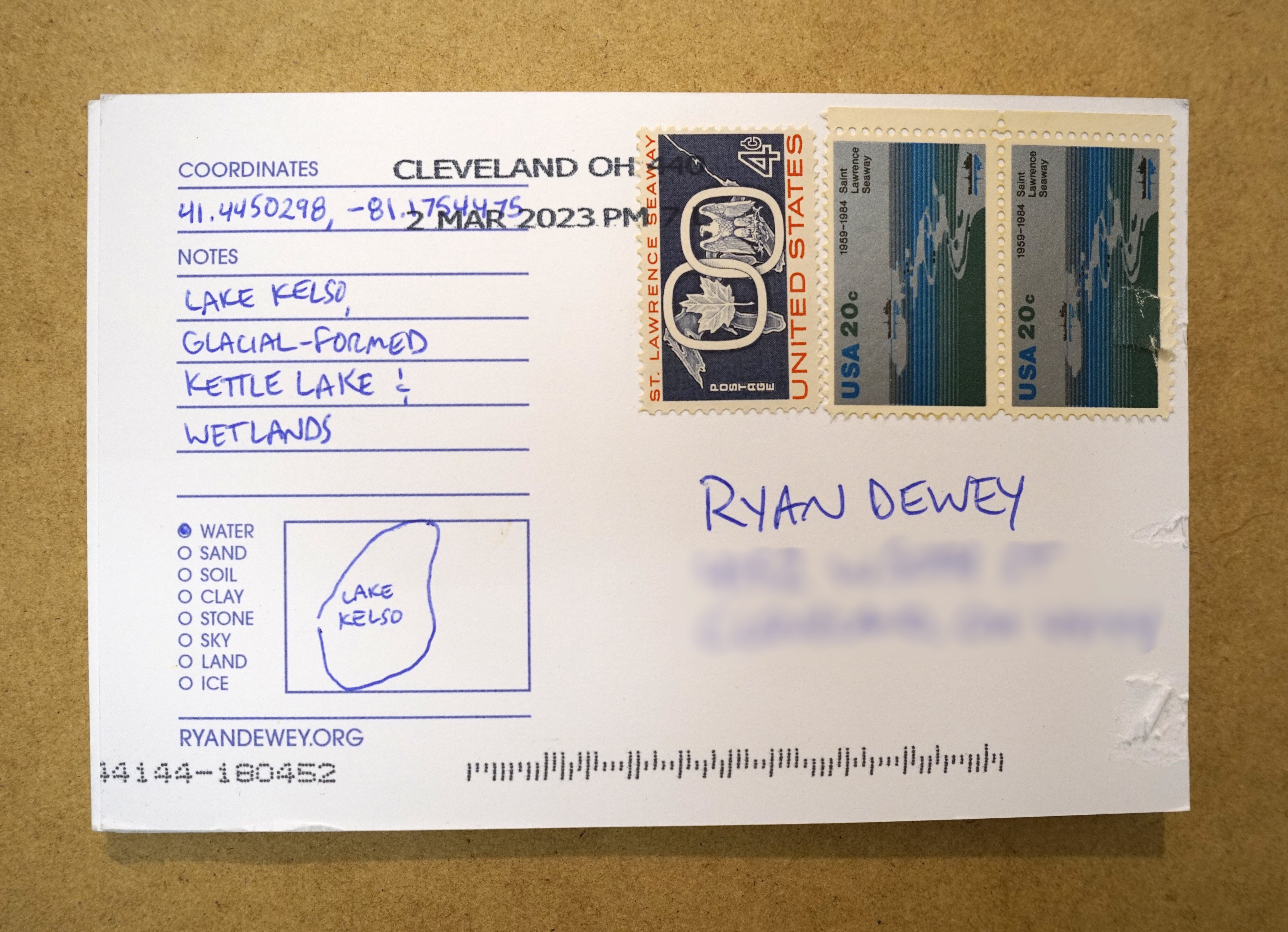
The earliest postcards I produced during this period were conceived less as messages and more as records. They functioned as timecards of presence, evidence that I had been somewhere, doing something, at a particular moment. The comparison to a timecard is not metaphorical. In most cases, one postcard entered my archive, one returned to my studio, and others entered circulation. Together, they form a triangulated record of activity, intention, and outcome.
Some postcards were handwritten. Others carried adhered samples: clay collected from shorelines, sand from quarry floors, or sediment lifted from glacial grooves. In some cases, water from the site was used to soak and dry the postcard surface, leaving tide lines, stains, or warping that could not be simulated later. These were not aesthetic flourishes added in post-production. They were the result of the postcard being treated as a working surface while I was still in the field.
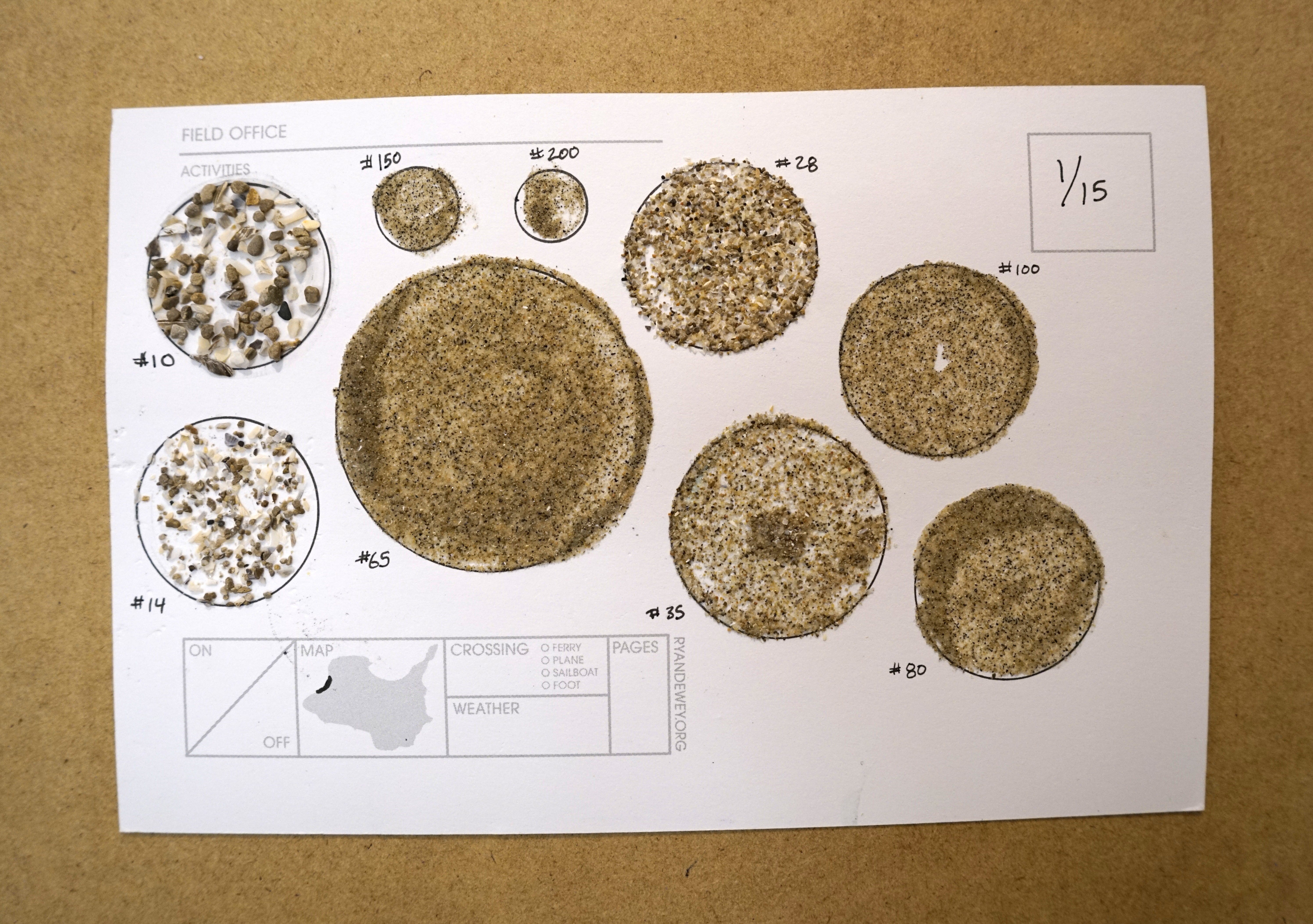
The cards often traveled with additional ephemera. Notes, fragments, and inserts accompanied them in boxed sets dispatched when I was on the island. These boxed mailings allowed for a more expansive transfer of material context, but the postcard remained the anchor. It was the item guaranteed to pass through the postal system, to receive markings, to be handled, sorted, bent, delayed, and sometimes damaged.
That damage matters. Bent corners, surface abrasions, and water exposure are not incidental failures but records of transit. Like covers, postcards participate in the journey, they are factual artifacts of the journey in addition to their function of describing the journey.
BUILT-IN TEMPLATES AND FIELD DISCIPLINE
While many of these postcards appear informal, they are not unstructured. I designed them with embedded templates that could be activated or ignored depending on conditions. Some include form fields, gridded areas, or reserved zones for annotation. These layouts recurred across designs to train my hand through use, as much as these layouts increased speed, they impacted the way I would reflect upon and relate the activities I was undertaking.
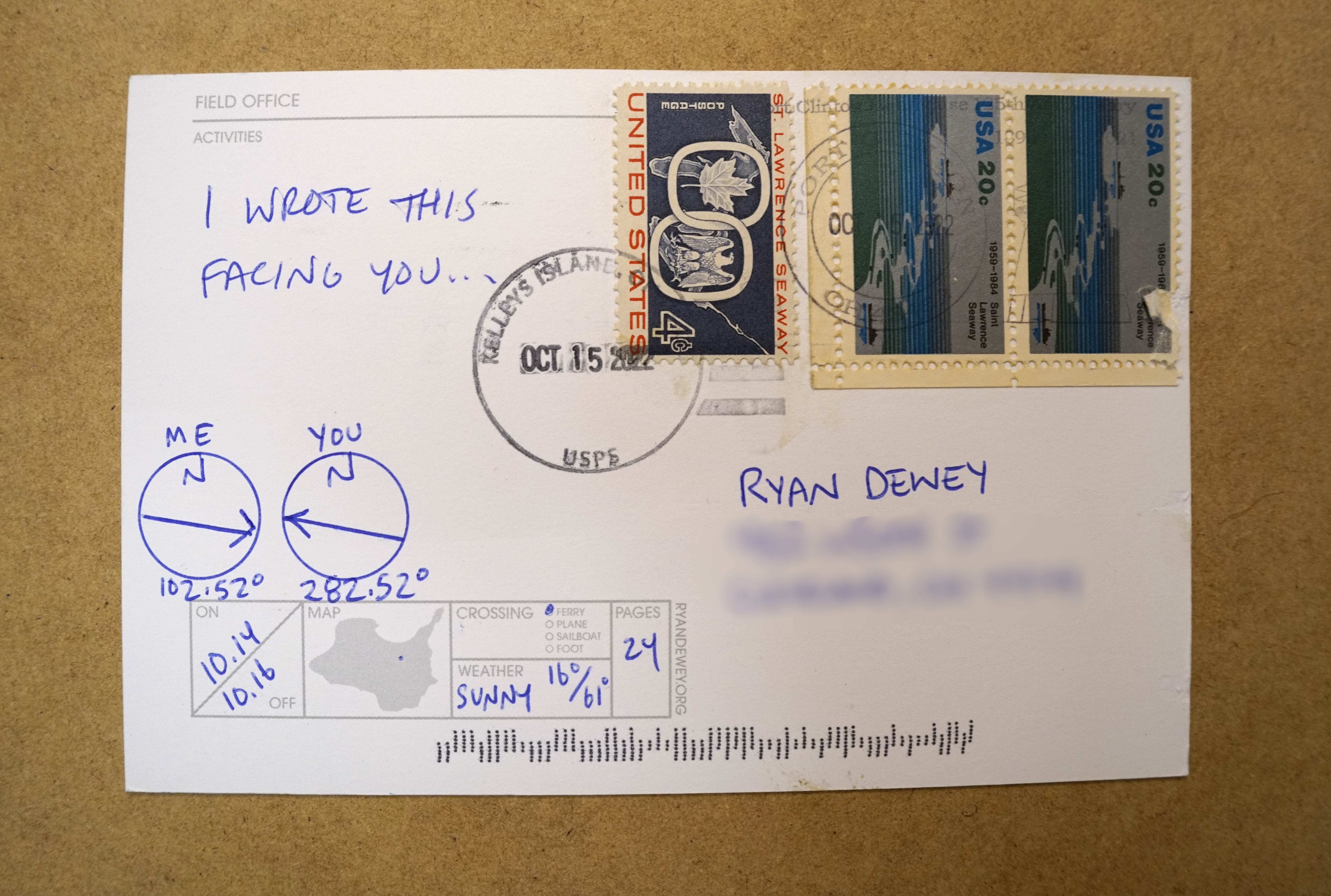
This approach reflects a broader concern I have with field discipline. Under expedition conditions, especially during training, cognitive load is high and attention is fragmented. Templates allow documentation to persist even when intention falters. It is so easy to be distracted when you’re immersed in fieldwork. Templating functioned here to ground my thought process into a formally constrained communication protocol. Not every postcard is fully completed. Not every field is filled. That incompleteness is itself informative.
Importantly, the postcards do not assume an audience fluent in philatelic convention. Their primary function communicates content: a drawing, a sample, a map, a note. Only later does the mechanism of postage, cancellation, routing, and provenance assert itself, and only if the reader becomes curious about it enough to investigate. This ordering is deliberate. There is a debate in postal collecting circles about covers and postal artifacts that are contrived or authentic. My postcards straddle that line, a distinction that I will address that in a subsequent post because the nuance deserves its own treatment.
SITE SEEN: ROAMING POSTCARDS & MAPPED MOVEMENT
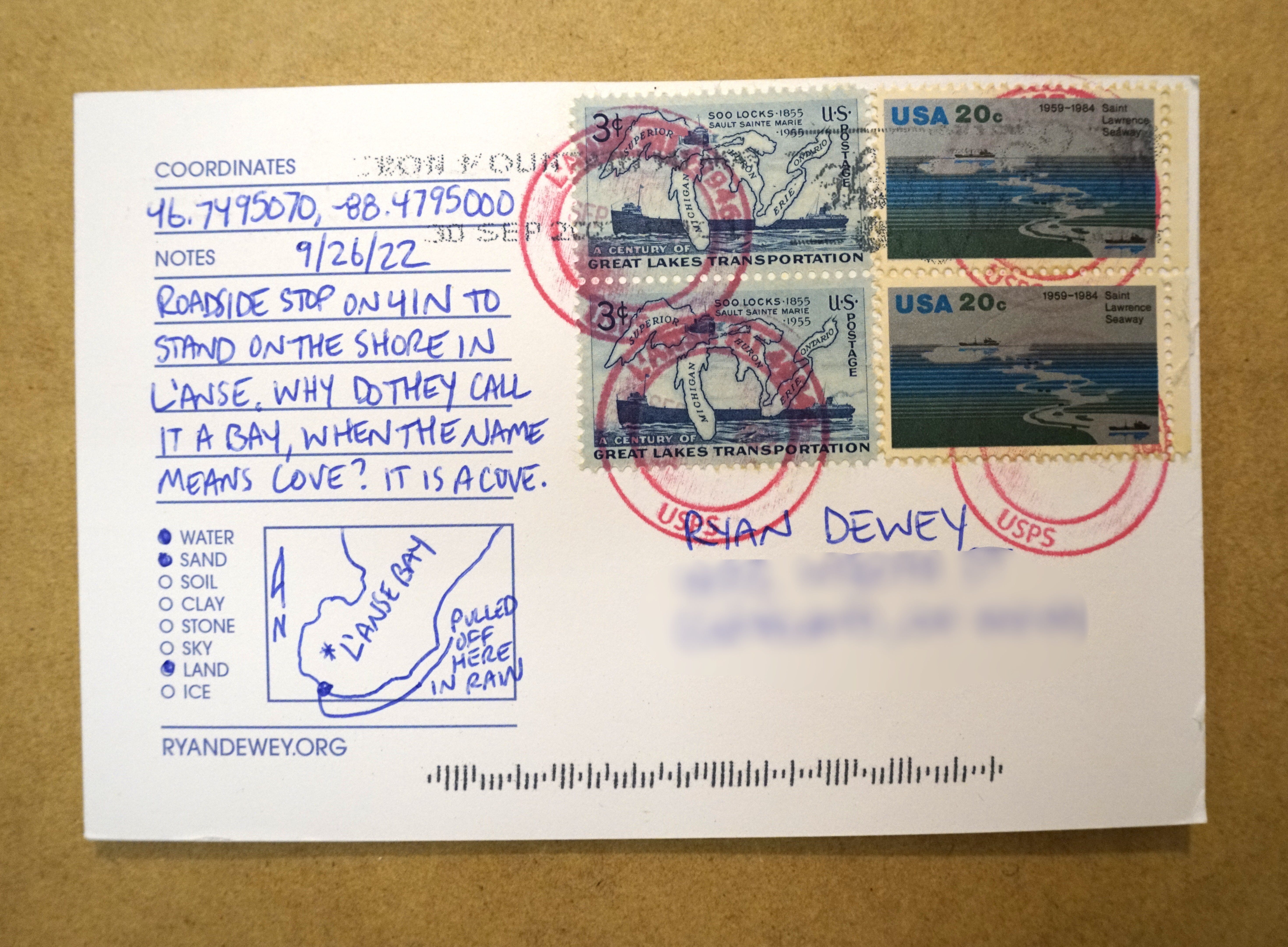
Running parallel to the boxed dispatches is an ongoing postcard project titled SITE SEEN. These postcards are sent as I move through the Great Lakes region observing post-glacial landscapes and collecting samples. Each card features a small thumbnail drawing, often produced quickly on site, and a map of the Great Lakes printed on the face of the card that I annotate with a red dot to indicate the location of dispatch graphically.
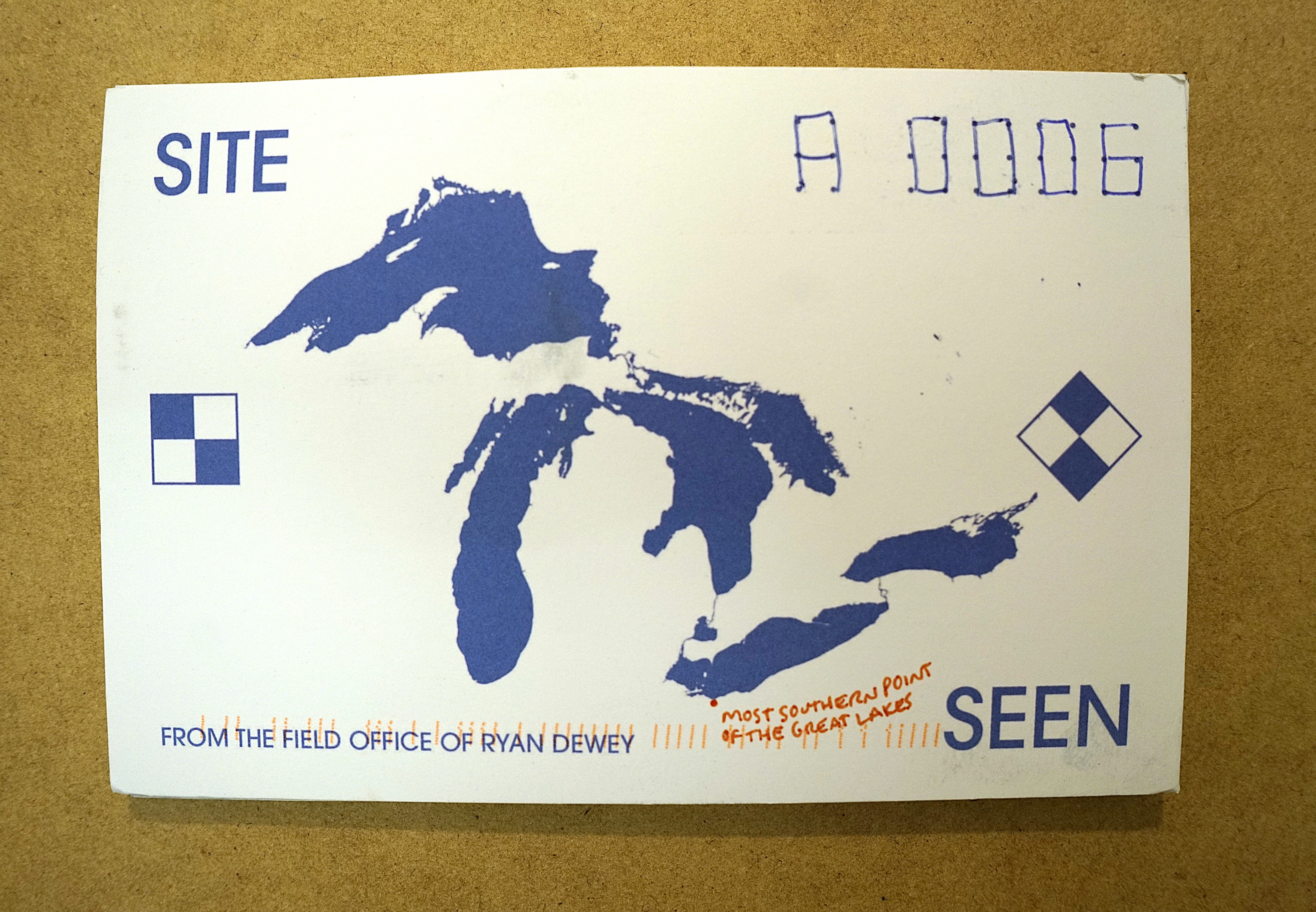
This gesture is simple, but it collapses scale by making the approximate location legible next to a known map abstraction of the lake bodies. The same dot marks a precise location and a regional context simultaneously. It situates a local observation within a continental system shaped by glaciation, retreat, and hydrological reorganization.
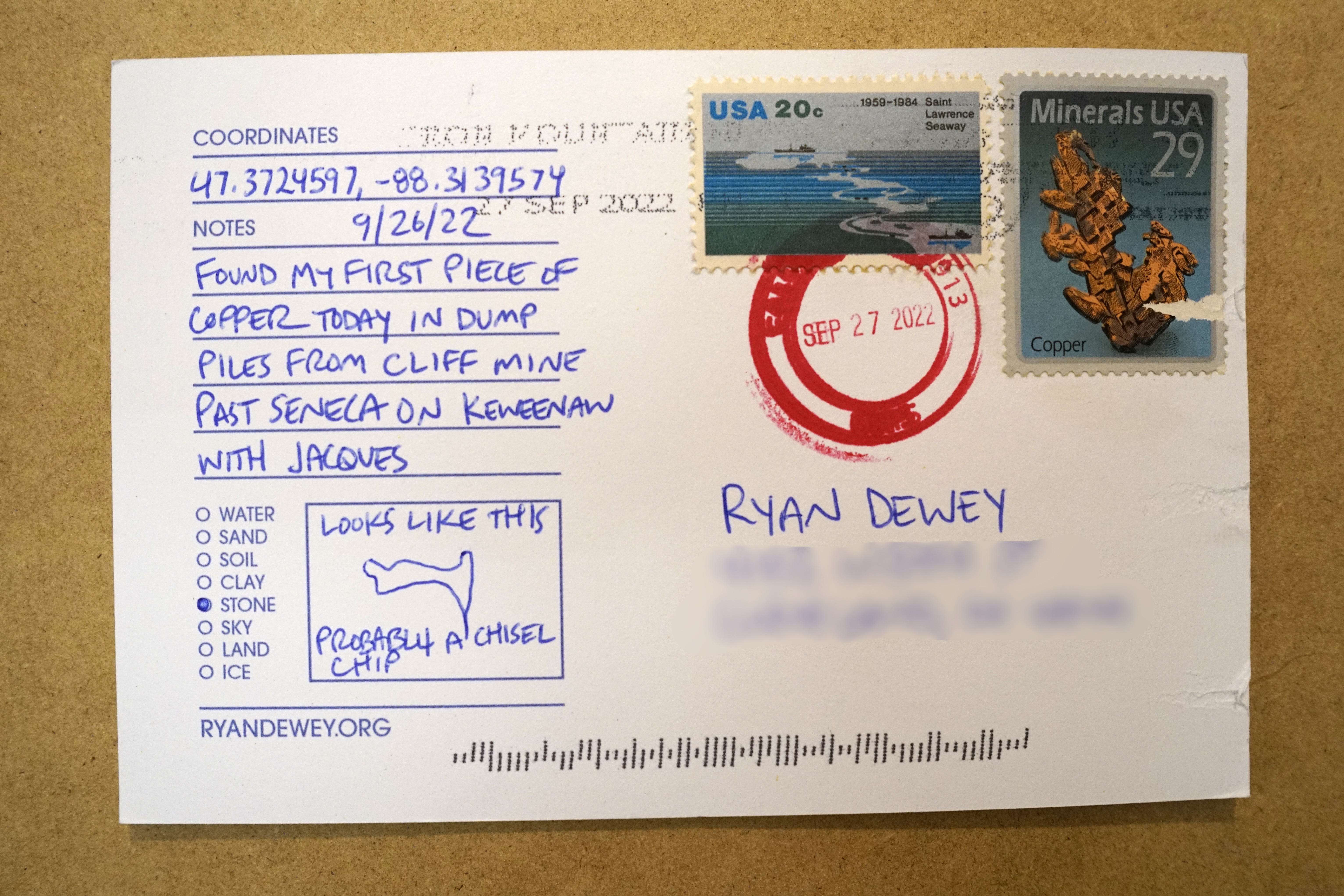
The SITE SEEN postcards are not sequential dispatches from a fixed location. They are scattered signals from movement that I still send to myself and my archive when the fieldwork encounters a relevant new site. Each card is intended to stand alone, legible without requiring the others.
POSTAGE, PLACE, AND AFFILIATION
Across both postcard projects, postage selection is treated as a content-bearing decision. I select stamps with topical relevance to geography, hydrology, geology, or infrastructure related to the site of posting. This practice is consistent with my approach to covers and reflects a belief that postage is not decoration but annotation.
Where possible, I use local water to wet the stamps. Lake water, quarry runoff, or collected samples are used to affix postage, embedding a trace of place into the adhesive layer itself. This detail is invisible once dry, but it matters. It reinforces the idea that the postcard is not merely sent from a place but partially composed of it.
These gestures are small, but cumulative. They communicate care. They also signal to recipients that the object has been thought through at multiple scales, from image and text down to adhesion.
SYSTEM FRICTION AND POSTAL REALITIES
In practice, postcards introduce their own frustrations. One persistent issue has been the refusal or inability of post offices to hand-cancel postcards dropped into interior mail slots after hours. Despite being mailed from vastly different locations, many postcards bear identical postmarks from regional Area Mail Processing Centers, where batch mail collected after hours is consolidated and processed.
This collapse of spatial specificity is a loss, but it is also data. It reveals how contemporary mail systems abstract place, privileging efficiency over locality. For a project concerned with movement, landscape, and provenance, that abstraction becomes part of the story.
Damage is another recurring factor. Postcards are more vulnerable than covers. They arrive scuffed, bent, and sometimes partially illegible. I do not attempt to prevent this entirely. Like the machine handling of my training covers which I’ll describe in a future article, postcard damage records the conditions under which contemporary expeditionary communication actually occurs.
OUTREACH BY INDIRECTION
Many recipients of these postcards did not identify as philatelists when they received them. They were drawn by content: landscapes, drawings, samples, and notes. After repeated exposure to the postage, cancellation, routing, and classification issues, some recipients became interested in postal history as a topic itself.
This indirection is intentional. By leading with content and allowing mechanism to become gradually familiar to the point of interest, the postcards function as a form of philatelic outreach. They invite curiosity without requiring prior allegiance to the discipline, and I’m not expecting people to become philatelists (I barely count as one myself). Over time, as recipients retained envelopes, compare postmarks, and ask about postal decisions, these content-seekers became collectors by default, or at least collector-adjacent.
In this sense, the postcards perform a different but complementary role to covers. Where covers often address an existing philatelic audience directly, postcards act as translators. They widen the aperture.
CONCLUSION
The postcard projects described here operate as both field records and communicative artifacts. They document movement, observation, and material encounter while participating fully in the postal system. Their informality is structured, their vulnerability intentional, and their circulation essential.
Together with the training expedition covers discussed earlier, they form a layered approach to expeditionary philately that begins long before arrival at the poles. In the next article, I will quickly discuss the issue of classification authenticity, are these contrived mail pieces or actual philatelic items? And then I will immediately turn outward again in my final article in this series, examining how contemporary mail systems shape expedition practices by analyzing a corpus of 101 identical training covers as a record of handling decisions, errors, and constraints imposed by modern postal infrastructure.
As with the previous articles, I offer this work as a case study and invite feedback. If polar philately is a record of how we communicate about exploration, then the preparatory stages deserve attention. They reveal not only where we are going, but how we learn to tell the story before we arrive.
The items depicted in this and other articles are available for circulation in exhibition contexts. I welcome enquiries.